Kitchen scales are the boring bit of kit that quietly fixes half the mistakes home cooks blame on recipes. If your bread dough feels wrong, your cake sinks, your rice portions wander, or your meal prep never quite matches the plan, weighing in grams gives you a repeatable answer instead of another dirty measuring cup.
In This Article
- Why Kitchen Scales Change the Way You Cook
- Why Baking Is Better in Grams
- Where Scales Help with Everyday Cooking
- Using Scales for Portions, Batch Cooking and Waste
- Digital vs Mechanical Kitchen Scales
- How to Use Kitchen Scales Properly
- What to Buy in the UK
- Frequently Asked Questions
Why Kitchen Scales Change the Way You Cook
The main reason you need kitchen scales is not because every home cook should suddenly become fussy. It is because volume measurements are unreliable. A mug of flour, a spoonful of peanut butter, a handful of grated cheese and a “medium” potato can vary wildly depending on who is doing the measuring.
Once you weigh ingredients, you remove that guesswork. A recipe that asks for 250g of flour means the same thing every time. A chilli with 500g of mince stays the same size whether you cook it on a Monday night or double it for the freezer. A pasta portion can be 75g dry per adult instead of whatever falls out of the bag before you panic and put half back.
The repeatability is the point
Good cooking is often less about one heroic meal and more about getting the same result twice. Kitchen scales help with:
- Baking: flour, sugar, butter and liquids behave better when measured by weight.
- Batch cooking: portions divide neatly, which makes freezer meals less random.
- Recipe scaling: doubling 180g of rice is simpler than doubling “one and a bit cups”.
- Reducing waste: you stop opening extra packets because you guessed short.
- Cost control: expensive ingredients such as nuts, chocolate, meat and cheese go further.
I use scales most when a recipe has disappointed once already. If the dish was too dry, too loose, too salty or too small, weighing the next attempt gives you something concrete to adjust. Without that, you are changing several variables at once and hoping for the best.
Scales are not just for neat bakers
There is a slightly annoying myth that scales are for people who label flour jars and own a sourdough lame. They are useful in normal kitchens too. If you already use a stand mixer for bread dough, weigh the flour and water. If you cook in bulk, weigh the finished food into containers. If you are trying to stop your air fryer chips turning into a full baking tray’s worth, weigh the potatoes before cutting them.
The best part is that kitchen scales cost less than most impulse kitchen gadgets. A decent digital set from Argos, Lakeland or John Lewis starts around £10-£20, while a good mid-range model usually sits at £25-£60. Compared with a blender, air fryer or stand mixer, that is tiny money for something you may use daily, which is why scales belong near the top of any list of kitchen gadgets that are actually worth buying.
Why Baking Is Better in Grams
Baking is where scales move from “nice to have” to “stop making life harder”. Flour compacts. Brown sugar clumps. Butter sticks to spoons. Cocoa powder gets everywhere. A 250ml cup of flour can change depending on whether you scoop, spoon or level it.
Flour is the biggest culprit
Flour is light, dry and easy to pack down. That means one person’s cup can contain much more flour than another person’s cup. In a sponge cake, too much flour gives you a dry crumb. In bread, it can make dough stiff before gluten has had a chance to develop. In pancakes, it turns a loose batter into paste.
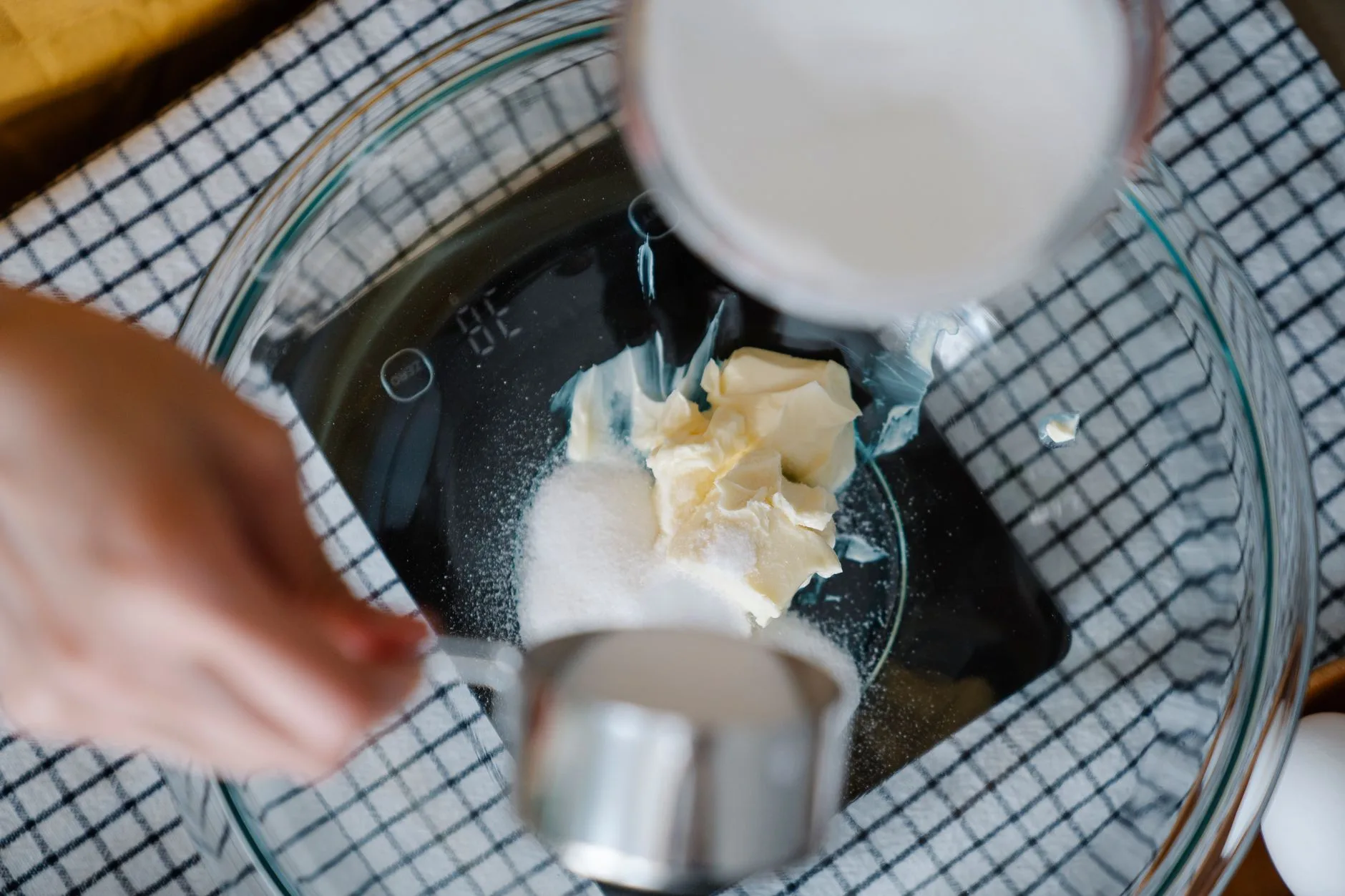
Weighing flour directly into the bowl fixes that. Put the bowl on the scale, press tare, add 300g flour, press tare again, add 7g yeast, press tare again, add 6g salt. No separate bowls. No flour dusted across the worktop. No “was that the second spoon or the third?” moment.
Ratios become easier to understand
Scales also make baking ratios visible. A basic bread dough might use 500g flour and 325g water, which is 65% hydration. You do not need to become a bakery nerd to benefit from that. It simply tells you why one dough feels soft and another feels stiff.
The same applies to cakes and pastry. Once you know the weight of your eggs, butter, flour and sugar, you can spot why a recipe behaves oddly. That matters when adapting recipes for different tins, smaller households or a stand mixer bowl size that is not quite what the recipe writer used.
Butter and sticky ingredients are less annoying
Scales make sticky ingredients easier because you can weigh them into the mixing bowl. Instead of scraping golden syrup from a spoon and losing half of it, put the tin on the scale, press tare, spoon out until the display shows -80g, and you know you removed 80g. It is a tiny trick, but it saves washing up and bad language.
For baking, I would choose a digital scale with 1g increments, a tare button that responds quickly, and a flat platform big enough for a mixing bowl. A cheap glass scale can work fine, but the display needs to stay visible when a large bowl is sitting on top.
Where Scales Help with Everyday Cooking
Kitchen scales are not only about cakes. They make savoury cooking calmer because you can measure the ingredient that controls the dish rather than the ingredient that happens to be easiest to count.
Rice, pasta and grains stop drifting
Dry rice and pasta are classic over-pour ingredients. For most adult portions, 60-75g dry rice or 75-100g dry pasta is a useful starting range, depending on appetite and what else is on the plate. Once you weigh it a few times, you quickly learn what your household actually eats.
That helps with cost as well as leftovers. A 500g bag of pasta should make roughly five to six adult portions, not three giant bowls followed by regret. If you batch-cook, weighing dry grains before cooking also makes it easier to estimate container sizes and freezer space.
Meat, fish and plant protein become easier to split
Recipe packs rarely match household appetites neatly. A 750g pack of chicken thighs, 500g mince or 400g tofu block may need splitting across two meals. Weighing before cooking helps you divide it properly instead of eyeballing one large portion and one sad one.
This is also useful when freezing. Label a freezer bag “beef mince, 250g, June” and future you has a much easier Tuesday. Pair that with batch cooking and freezing meals efficiently and your freezer becomes less of a mystery drawer.
Seasoning is easier when you scale recipes
If you double a curry, stew or pasta sauce, salt and spices need thought. Weighing the main ingredients gives you a clearer base. You might double the tomatoes and mince, but only increase chilli by 50% if you are cooking for children. You might use 10g salt for 1kg meat in one recipe, then adjust next time because you know exactly what you did.
This is where scales quietly make you a better cook. They give you a record. You can write “next time 5g less salt” in a recipe note and it means something.
Using Scales for Portions, Batch Cooking and Waste
The most practical use for scales in a busy UK kitchen is portion control without making dinner feel like a spreadsheet. You do not need to weigh every grape. Use scales where the measurement changes the result, the cost or the waste.
Portions are easier to repeat
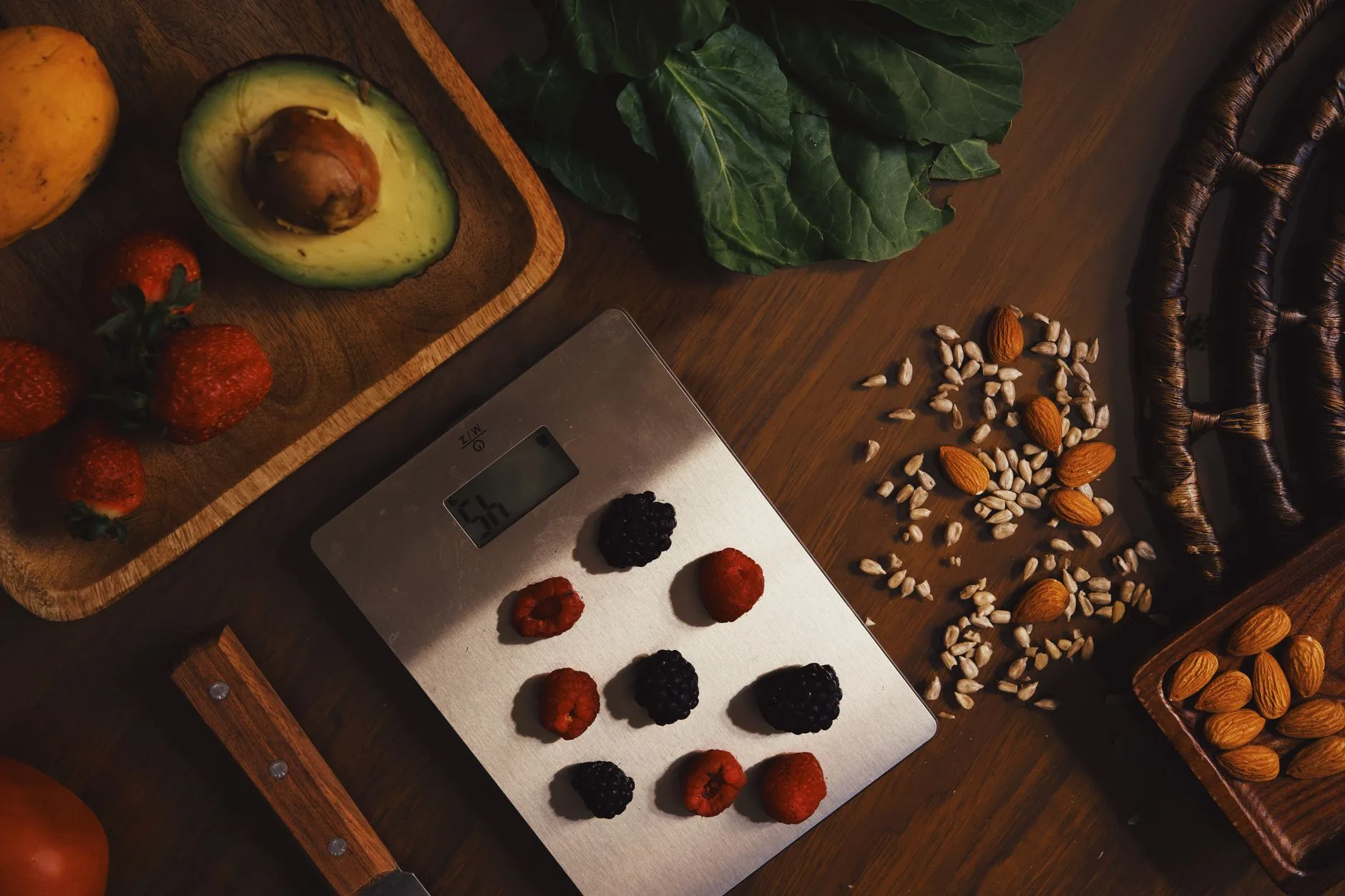
The NHS gives 80g as a typical adult portion for fruit and vegetables in its 5 A Day portion size guidance. You do not need to weigh vegetables forever, but weighing a few common portions teaches your eye. After a week, you know what 80g of berries, peas or carrots looks like in your bowls.
Scales are also useful for breakfast and snacks. Cereals, granola, nuts and cheese are easy to pour generously because they look small in the bowl. Weighing them a few times gives you a realistic sense of portion size without turning the kitchen into a diet app.
Batch cooking becomes more even
If a pot of chilli weighs 2.4kg after cooking and you want six portions, each container gets about 400g. That is much better than filling the first four containers enthusiastically and leaving the last two short. You can do the same with soup, curry, cooked rice and pasta bakes.
Weighing finished food also helps with reheating. A 350g soup portion behaves differently from a 700g one in the microwave. If your containers are similar sizes, you can heat them more reliably and avoid the cold-middle problem.
Waste drops because guesswork drops
Expensive ingredients are where scales pay for themselves. Parmesan, nuts, chocolate, spices, coffee beans and good olive oil do not need casual overuse. Weighing 30g of walnuts for banana bread or 20g parmesan for pasta means the packet lasts longer.
There is a trade-off. If weighing every ingredient makes you cook less, stop. Scales should remove friction, not add ceremony. Use them for ingredients where being wrong matters, then cook normally around that.
Digital vs Mechanical Kitchen Scales
Both digital and mechanical scales can work in a home kitchen, but they suit different habits. Most people should buy digital scales first. Mechanical scales look nicer on a shelf, need no batteries and can handle big bowls, but they are less precise for small amounts.
Digital scales suit most kitchens
Digital scales usually measure in 1g increments, take up little drawer space and include tare. That makes them better for baking, coffee, meal prep and recipe scaling. A slim 5kg digital scale is enough for most households.
Look for:
- 1g increments: fine for normal cooking and baking.
- 5kg capacity: enough for a mixing bowl plus ingredients.
- A clear display: ideally visible when a dinner plate or bowl sits on top.
- Responsive tare: because you will press it constantly.
- Easy cleaning: a flat glass or stainless platform wipes down quickly.
The weakness is batteries and auto-off. Some cheap models turn off too quickly, which is maddening halfway through weighing flour. If you bake regularly, a longer auto-off time is worth paying for.
Mechanical scales are better as permanent counter kit
Mechanical scales make sense if you like visible, always-ready kit. They are good for rougher kitchen jobs: potatoes, onions, apples, flour in larger amounts. They are less good for yeast, spices, coffee or small baking adjustments because the dial is harder to read accurately.
A Salter-style mechanical scale at about £20-£30 from Lakeland, Amazon UK or a department store is a nice object. I would not make it my only scale unless you rarely bake. The sensible setup for keen cooks is a slim digital scale in the drawer and a mechanical scale only if you enjoy the look.
Do not use domestic scales for selling food
One important boundary: domestic kitchen scales are for home cooking, not selling food by weight. GOV.UK’s weights and measures equipment guidance explains that businesses need suitable weighing equipment and cannot use domestic scales to weigh goods they intend to sell. If you are making jam, cakes or meal boxes commercially, buy trade-approved kit and speak to Trading Standards.
Features worth paying for
Cheap scales can be accurate enough, so do not assume the most expensive model is automatically best. The better question is whether the features solve a problem you actually have.
#### Tare is non-negotiable
Tare resets the display to zero after you put a bowl, plate or container on the platform. Without it, you are doing subtraction in your head while holding a flour bag. No thanks.
For normal cooking, tare matters more than fancy app features. You want to put a bowl on the scale, zero it, add an ingredient, zero it again, and keep going. If the button is slow, stiff or tucked under the bowl, the scale will annoy you every time.
#### Platform size matters more than style
A tiny scale looks neat in a drawer, but a large mixing bowl can hide the display. That is why the OXO Good Grips pull-out display style, often around £55 at John Lewis, has a loyal following. It is not cheap, but the display solves a real kitchen problem.
If you cook in large bowls, pick a platform wide enough to stay stable. If you mostly weigh coffee beans, oats and snacks, a smaller scale is fine. For pizza dough or bread, consider a 10kg or 15kg capacity model such as a Salter high-capacity digital scale at roughly £25-£35.
#### Waterproofing is useful but not essential
Waterproof scales are handy if you weigh wet bowls, rinse the platform or cook with children. They also tend to cost more. A Salter waterproof 10kg model at John Lewis is usually in the £30-£40 zone, while basic slim scales can be under £15.
If you keep scales dry and wipe them rather than washing them, basic models last well. The main killer is letting liquid run into the buttons or battery compartment.
#### Bowl scales are a mixed bag
Scales with built-in bowls look useful, but they can be awkward to store and less flexible. A flat digital scale lets you use any bowl, saucepan, plate or freezer container. Built-in bowls are best for people who want a permanent baking-station setup and have the cupboard space.
For small kitchens, I would rather have a slim digital scale and use the bowls I already own. It works better with small kitchen organisation because the scale slides beside chopping boards or baking trays.
How to Use Kitchen Scales Properly
Kitchen scales are simple, but a few habits make them more reliable. Most problems come from unstable surfaces, hidden displays or forgetting to tare.
Use one continuous weighing flow
For a basic cake mix, the cleanest method is:
- Put the bowl on the scale: wait for the number to settle.
- Press tare: the display should return to zero.
- Add the first ingredient: pour slowly as you approach the target weight.
- Press tare again: reset before the next ingredient.
- Repeat carefully: use a spoon for small amounts such as salt, yeast or baking powder.
This method keeps washing up down because you are not using separate measuring cups. It also makes recipe scaling easier because every ingredient lands in one bowl in order.
Put the scale on a flat surface
Scales hate wobbly chopping boards, tea towels and uneven hob covers. Use a flat worktop. If the numbers drift, move the scale, check the feet and make sure nothing is touching the bowl. A bowl leaning against a packet of flour can ruin the reading.
Watch the units
Most digital scales switch between grams, kilograms, ounces, pounds and millilitres. Stick to grams for solid ingredients. The millilitre setting is fine for water-like liquids, but it can mislead with dense syrups or oils. If a recipe gives liquid by weight, weigh it in grams.
Change batteries before blaming the recipe
Weak batteries can cause slow readings, flickering displays or sudden shut-offs. If your scale starts behaving oddly, change the batteries first. CR2032 coin cells are common and cheap, but some larger models use AAA batteries, which I prefer because they are easier to find in the drawer.
What to Buy in the UK
Most home cooks do not need a premium scale. Spend according to how often you bake, how large your bowls are and whether the display stays visible.
Budget pick: basic slim digital scales
A basic slim digital scale from Argos, Lakeland or Amazon UK is the best first buy. Current UK examples include Salter slim digital scales at Argos around £14-£19 and Simply Lakeland slim glass scales around £9.99. Expect 5kg capacity, 1g increments, tare and a wipe-clean platform.
This is the one I would buy for a student kitchen, a first flat or anyone who wants to test the habit. It is cheap enough that you will not feel precious about using it daily.
Mid-range pick: better display and build
If you cook often, spend £25-£40 on a sturdier model with a clearer display, better buttons or higher capacity. Salter 10kg waterproof or 15kg digital scales are good examples to compare. They make sense if you bake bread, use heavy mixing bowls or weigh family-sized batch cooking.
This is the sweet spot for most keen home cooks. You get more capacity and nicer controls without paying for clever features you may ignore.
Premium pick: pull-out display or dual platform
Premium scales are worth it only if they solve a specific problem. The OXO Good Grips stainless digital scale with pull-out display is around £55 at John Lewis and is useful when large bowls cover normal displays. Joseph Joseph SwitchScale is usually around £54-£60 and gives you a reversible bowl/platform design.
For pizza, coffee and bread obsessives, dual-platform scales such as Ooni’s model around £50 can be useful because they combine a normal weighing platform with a smaller precision platform. For most families, that is nice rather than necessary.
My recommendation
For most UK kitchens, buy a flat digital scale with 5kg capacity, 1g increments, tare, and a display you can read under a mixing bowl. If you bake weekly, step up to a sturdier £25-£40 model. If you only cook occasionally, the £10-£20 models are good enough.
The bigger win is not the brand. It is actually using the scale. Keep it easy to reach, use it for flour, rice, pasta, meat, batch cooking and expensive ingredients, and it will earn its drawer space faster than most gadgets.
Frequently Asked Questions
Are kitchen scales really necessary for home cooking? They are not necessary for every dish, but they make baking, batch cooking, portions and recipe scaling much more reliable. If you cook from recipes often, they are one of the cheapest upgrades you can make.
Are digital or mechanical kitchen scales better? Digital scales are better for most home cooks because they measure in 1g increments, include tare and store easily. Mechanical scales are attractive and battery-free, but less precise for small amounts.
What capacity should kitchen scales have? A 5kg capacity is enough for most households. Choose 10kg or 15kg if you use heavy mixing bowls, make large bread batches or weigh big batch-cooking portions.
How much should I spend on kitchen scales in the UK? Spend £10-£20 for a basic digital scale, £25-£40 for better build and capacity, or £50-£60 for premium features such as pull-out displays or dual platforms.
Can I use kitchen scales for coffee? You can, but normal 1g kitchen scales are a bit blunt for espresso. For filter coffee they are fine. For espresso, buy a coffee scale with 0.1g increments and a timer.
Can domestic kitchen scales be used for selling food? No. Domestic scales are for home cooking. If you sell food by weight, you need suitable trade-approved weighing equipment and should follow Trading Standards guidance.