Why is my slow cooker stew watery after the full cooking time? Usually the closed lid retained added stock and moisture released by the ingredients. Check that the meat and vegetables are cooked before you touch the sauce. Then taste a spoonful: a generous but flavoursome broth needs a different fix from thin, diluted gravy. Remove surplus liquid, reduce it in a suitable pan, or thicken a small amount at a time. Don’t keep cooking underdone food just to chase a thicker sauce, and don’t assume a thick sauce means the food is safe.
In This Article
- Why is my slow cooker stew watery? Check the symptom first
- Too much liquid went in at the start
- The ingredients released more moisture than expected
- A closed lid keeps the liquid in
- How to rescue a watery stew that is fully cooked
- When the watery stew is not ready to serve
- How to prevent a thin sauce next time
- Which fix suits the stew in front of you?
- Frequently Asked Questions
Why is my slow cooker stew watery? Check the symptom first
A slow cooker traps moisture under its lid. Stock you added at the start is still there at the end, joined by juices from meat and vegetables. That is why a hob recipe can make a good slow-cooker stew taste watered down when you transfer its entire stock quantity unchanged. But “watery” can mean three different things, and a thickener is not always the answer.
- Deep pool, good flavour: There is simply more liquid than you want. Lift out some sauce or reduce a portion separately; adding flour to all of it may make the pot heavy and gluey.
- Thin texture, good flavour: The amount of sauce is about right, but it does not cling to a spoon. A small cornflour slurry, cooked through, is a reasonable finishing choice.
- Thin and bland: Too much stock has diluted the seasoning. Remove or reduce liquid first, then taste again. Thickening alone changes texture, not flavour.
- Liquid around firm vegetables or underdone meat: This is a cooking check, not a sauce-only problem. Finish cooking safely according to the recipe and your machine’s instructions before serving.
Check the food before fixing the gravy
The sauce can be bubbling at the edge while a large piece in the centre needs more time. Cut into the thickest piece, check the vegetables you intend to serve, and use a clean food thermometer when needed. The Food Standards Agency’s cooking guidance gives 70°C for two minutes in the centre, or specified equivalent time-temperature combinations, as a general thorough-cooking benchmark. Follow the recipe and any food-specific advice too. Do not use sauce thickness as a doneness test.
If the food is cooked, switch from “leave it on longer and hope” to a deliberate sauce fix. If it is not cooked, keep the lid on and complete the intended cook. Lifting it repeatedly loses heat; the Lakeland manual for one 6-litre model says each lift adds about 25 minutes, but that is a model-specific illustration, not a timer correction for every cooker.
Too much liquid went in at the start
The most common cause is copying a hob casserole’s liquid amount into a covered pot. A hob pan loses steam, especially when it simmers uncovered; a slow cooker retains much of it. Tomatoes, wine and canned ingredients also count as liquid. If the recipe says “add stock to cover” and you add a full tin of tomatoes as well, the total may be larger than you think.
Check the recipe and the manual, not a magic ratio
We checked Lakeland’s actual model instructions rather than borrowing a universal stock ratio. There is no safe universal instruction to halve every recipe’s stock. The amount depends on the ingredients, fill level, cooking time and machine. The Lakeland model 17168 instruction booklet, for example, tells owners to add enough liquid to cover the ingredients for its method, yet its troubleshooting section suggests reducing the amount next time if the sauce is too watery. Its sausage-and-bean recipe uses measured stock and wine with a cornflour paste. Those are useful examples of why you should start with a model-appropriate recipe, not treat a single internet ratio as appliance law.
If you converted an oven or hob stew, note exactly how much stock, tomatoes and wine you used this time. On the next cook, reduce one added liquid, not every source at once, while staying within your recipe and manual’s minimum liquid and fill instructions. You can add a little hot liquid later if a recipe needs it; you cannot evaporate a litre quickly with the lid firmly on.
Why changing the pot size can change the result
A small batch in a much larger bowl may not behave like the recipe’s intended batch. It can leave the ingredients spread out and tempt you to pour in stock just to cover them. Check the working capacity and minimum fill in your own manual. Lakeland’s 6-litre-labelled model, for instance, states a 4.3-litre working capacity and at least one-third fill; another model may differ. Our slow-cooker size guide helps match capacity to portions, but it is not a substitute for the maker’s fill line.
The ingredients released more moisture than expected
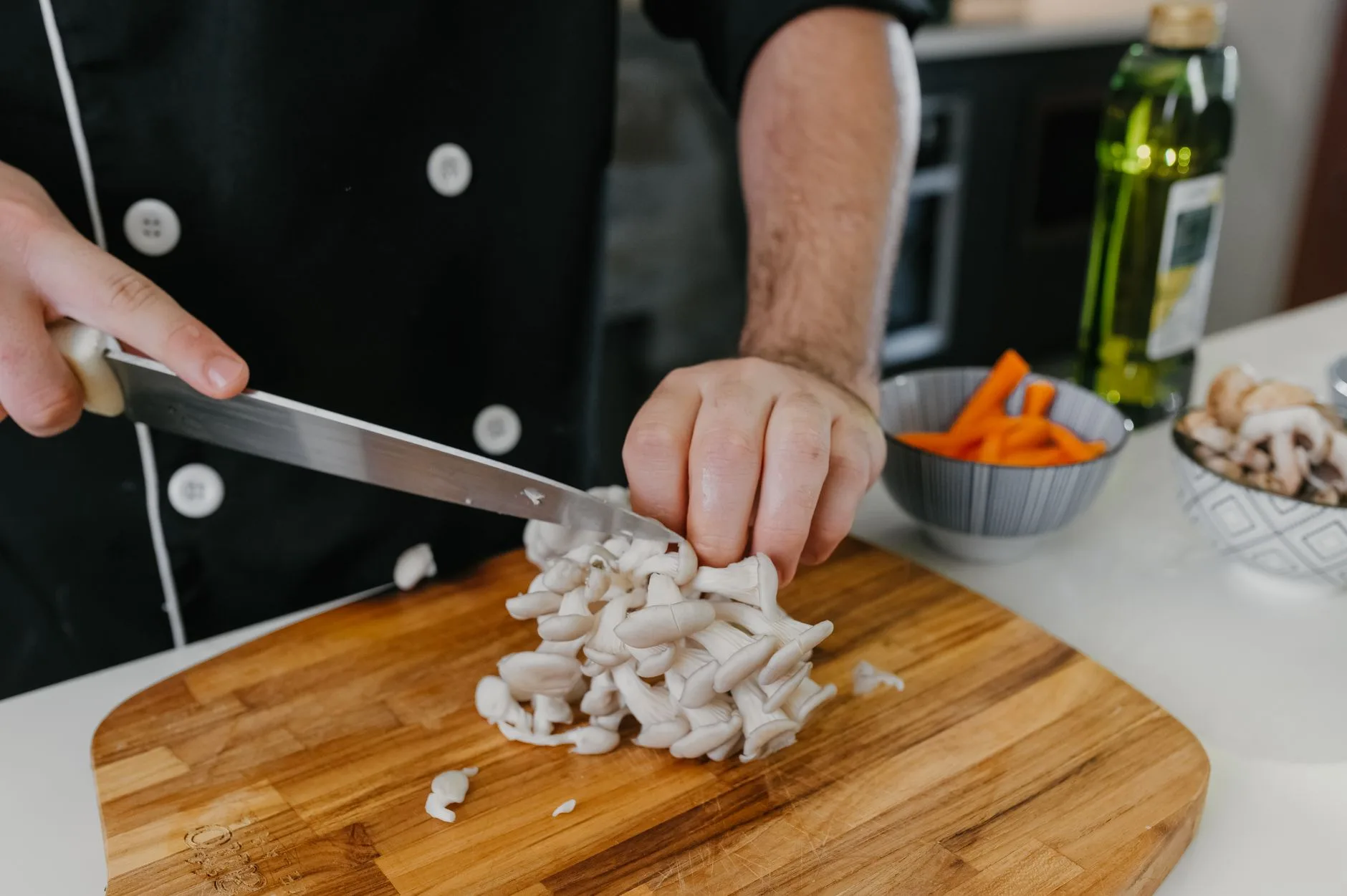
A stew that looked fairly dry at the start can collect a surprising amount of liquid after several hours. Mushrooms, courgettes, tomatoes and onions release water as they soften; meat releases juices too. The more of these you use, the less stock you may need. This is a recipe-composition issue, not evidence that the appliance is faulty.
Read the ingredients list as a liquid budget
Before adding stock, count the moisture already coming from tinned tomatoes, passata, wine, canned beans and any other wet ingredient. Drain ingredients when the recipe expects them drained. If you want the bean liquid for flavour or body, count it as part of the sauce rather than as a free extra. Do not pour in stock just because the bowl looks exposed before the vegetables soften.
A dish with several juicy vegetables is different from a beef-and-root-vegetable stew. The first may need very little added liquid; the second may need more to follow its recipe. These are cooking choices, not fixed measurements. A reliable way to learn your own pot is to use the same recipe twice and change just one measured addition. Record the amount and the final texture. That tells you more than an unqualified “use half the liquid” rule.
Frozen and very wet ingredients
Frozen meat is a separate safety matter, not a handy way to add moisture. The Lakeland manual cited above says to defrost meat thoroughly and never cook it from frozen in that model. Follow your appliance instructions and the recipe’s food-safety directions; do not use frozen meat as an experiment to adjust sauce texture. With suitable frozen vegetables, follow the recipe or pack guidance and expect that thawing may add water. With canned vegetables or beans, drain them if that is what the recipe calls for.
If your finished stew has a clear watery layer but the meat, vegetables and seasoning are good, removal is usually kinder than dumping thickener into the whole bowl. Ladle some off into a heatproof container first. You can decide whether to reduce it and return it after you see the texture left behind.
A closed lid keeps the liquid in
The lid is doing its job when steam condenses and drips back into the pot. That makes slow cooking convenient, but it is poor at reducing a sauce. A regular stew may finish with a rich gravy because the pan was uncovered for the final part; the same mixture can stay loose under glass. Turning a dial from Low to High does not automatically turn a slow cooker into an uncovered hob pan.
Can you take the lid off to thicken the stew?
Only if your recipe and machine allow it, and only once the food is cooked. Lakeland’s model 17168 troubleshooting guidance suggests removing the lid and cooking on High for 30 minutes for an overly watery sauce. That advice belongs to that model, not all slow cookers. Other machines may heat differently or require their lid to stay on. Do not use an open-lid finish as an improvised way to cook raw poultry or other underdone food: follow the proper cooking instructions, then handle the sauce.
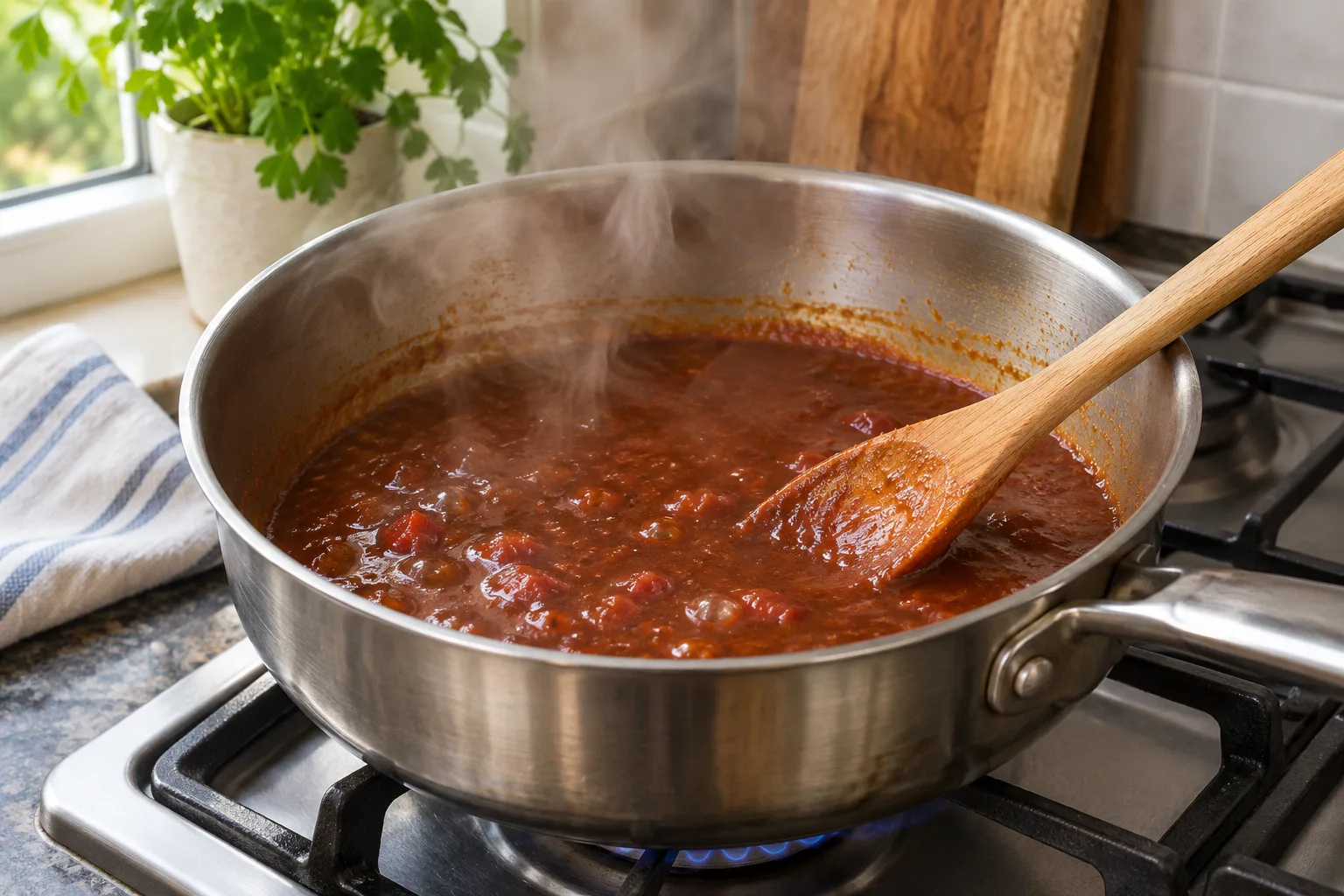
A wider pan on the hob usually gives more control over reduction. Transfer some sauce to a suitable saucepan, bring it to a proper simmer, stir and taste as it concentrates, then pour back while hot. Use oven gloves and mind steam when opening the lid. Never put a ceramic insert on a hob unless its own manual explicitly says it is hob-safe. Lakeland specifically says not to put its ceramic pot or glass lid directly on a gas or electric hob. The insert is not automatically a casserole pan. If you prefer a hob-to-oven vessel for a different cooking routine, our cast-iron casserole guide explains that option; it is not necessary to rescue today’s stew.
Don’t confuse evaporation with thickening
Reducing takes water out and concentrates flavour. Flour, cornflour or granules change texture, but leave the original water in the dish. That distinction matters if the stew is both thin and bland: a large dose of starch can give you thick, bland sauce. It also matters if the stew already tastes salty. Reducing a salty broth may make it too salty; removing some and rebuilding the balance with appropriate ingredients may be better. Taste before choosing.
How to rescue a watery stew that is fully cooked
Once the food is thoroughly cooked, we favour the smallest reversible correction that fits the symptom. A little broth around tender ingredients is not a failed stew. You may prefer it as a soup-like dish rather than forcing it into gravy. If you do want a thicker stew, these fixes give you control without hiding the ingredients.
If there is simply too much liquid
- Ladle out a little. Remove a modest amount into a heatproof jug; keep it until you have tasted the remaining stew. This is reversible and avoids an accidentally pasty sauce.
- Reduce separately if flavour needs concentrating. Simmer the removed liquid in a suitable pan until it tastes and looks closer to what you want. Keep stirring near the end, when it can catch.
- Return only what helps. Stir the hot reduced sauce back in gradually. You may not need all of it. Taste before adding salt.
Do not pour hot liquid into a cold, fragile insert without checking the maker’s thermal-shock instructions. You can instead portion the stew into a suitable pan if the insert is awkward to work around. This is one reason a sturdy saucepan can be more useful than a special sauce gadget for a one-off rescue; our one-pot cooking equipment guide covers the trade-offs without suggesting a new appliance is necessary.
If the amount is right but the sauce is thin
Mix a small amount of cornflour with cold water in a cup until smooth; then stir it into hot liquid. Start conservatively, allow it to heat and thicken as the recipe or pack directs, and repeat only if needed. Pouring dry starch straight into the pot invites lumps. Plain flour needs proper cooking too or it can taste raw. The Lakeland manual’s sausage-and-bean recipe mixes one tablespoon of cornflour to a paste for its particular ingredient quantity; it is an example, not a dose for your stew.
If your slow cooker does not bring the sauce to the heat needed for a reliable finish, use a suitable saucepan rather than assuming the paste has cooked because it was stirred in. Gravy granules can be convenient, but check their salt and allergen information and add gradually. A spoonful of mashed cooked potato can add body to a matching stew, though it will also change the flavour and texture. For a clear broth, accepting a looser result may be better than adding starch at all.
When the watery stew is not ready to serve
There is a tempting shortcut here: if a sauce looks thin, add thickener and put dinner on the table. That does not make undercooked meat safe or firm vegetables pleasant. First ask whether the planned cooking time has really elapsed on the intended setting, the lid has stayed on, and the appliance was on rather than on a Keep Warm setting. A power cut or accidental switch-off changes the decision; do not assume the food is safe because it is warm now.
Keep texture and food safety separate
We use the FSA’s cooking benchmark for the safety check, separately from our sauce advice. The FSA says food should be cooked completely before serving and recommends a clean thermometer when needed. For a general thorough-cooking benchmark, it gives 70°C for two minutes at the centre or equivalent combinations. Poultry, pork, minced meat and other foods have specific advice on the same page. Use a clean probe in the thickest part, not in the thin sauce. If you cannot establish that the food was cooked and held safely after an interruption, do not serve it just because a quick boil or thickener makes it look right.
A stew that has finished cooking but then sat cooling for hours also needs a separate leftover-safety decision. Cool and store leftovers according to the FSA’s guidance rather than leaving a full warm pot on the worktop overnight. Our batch-cooking and freezing guide covers portioning and storage; it does not replace current official food-safety advice. Reheating a portion is not the same as completing a raw stew’s original cook.
When to stop experimenting
If the appliance seems not to heat, the food stayed lukewarm, or you do not know how long a meat stew was in an unsafe state, the honest fix is not to rescue the gravy. Check the appliance and food-safety guidance and discard the food when safe cooking cannot be established. Buying a replacement machine is a separate decision; first inspect the plug, setting and model instructions without opening or repairing an electrical appliance yourself.
How to prevent a thin sauce next time
Prevention is less about finding a universal stock-to-meat ratio and more about making one controlled recipe change. The fastest learning loop is to use a recipe written for slow cooking and your pot’s capacity, measure the wet ingredients, record what the sauce looked like, then adjust a single input next time. You can keep the same ingredient list while changing the finishing method.
A practical pre-cook checklist
- Start with the right recipe: Use one written for a slow cooker or convert cautiously, checking the machine manual for liquid and fill limits.
- Count every wet addition: Stock, wine, passata and tinned tomatoes are not separate freebies. If beans are to be drained, drain them.
- Match batch to working capacity: A pot’s advertised litres may exceed its working fill. Use the maker’s instructions and adjust portions to the vessel.
- Measure once: Write down the amount of stock used. A repeatable change beats guessing from the appearance of raw vegetables.
- Decide on your preferred finish: If you want a reduced, clingy gravy, plan a safe saucepan reduction after cooking rather than promising that the closed pot will evaporate it away.
Should you change slow cooker?
Usually not for one watery stew. A new cooker cannot repair a recipe with too much liquid. If the same tested recipe repeatedly misbehaves in a pot that is far too large for your usual portions, capacity may be worth reconsidering. Our best slow cookers UK guide compares models and controls for a genuine replacement decision; it is not a required purchase to thicken dinner. If the machine has an electrical fault or does not heat as its manual describes, stop using it and seek the maker’s support.
Which fix suits the stew in front of you?
If the ingredients are cooked and the broth tastes good, remove a little liquid and serve, or reduce some in a pan if you want a richer gravy. If the amount of sauce is right but it lacks body, use a small cold-water cornflour paste and make sure it cooks through. If it is bland as well as thin, concentrate or rebalance the liquid before thickening. If the food is underdone, complete the cook and check it properly; sauce work comes afterwards.
That order saves a decent stew from being made worse. It also avoids the most expensive mistake: buying another appliance when a measured stock change or a ten-minute finish in a suitable pan would solve the actual problem.
Frequently Asked Questions
Why is my slow cooker stew watery even though I used the recipe amount of stock? Vegetables, meat and tinned ingredients release moisture too. Check whether the recipe was written for a slow cooker and your batch size, and count every wet ingredient before changing the stock next time.
Can I leave the lid off to thicken a slow cooker stew? Only if your own model and recipe permit it, after the food is fully cooked. One Lakeland model suggests a short High-setting open-lid finish, but a suitable saucepan gives more controlled reduction and avoids treating that advice as universal.
How do I thicken stew without flour lumps? Mix a small amount of cornflour with cold water until smooth, stir it into hot sauce and allow it to cook as directed. Add more only after checking the texture; dry powder tipped into the pot is more likely to clump.
Will turning the slow cooker to High evaporate excess liquid? Not much with the lid closed, because steam condenses and returns to the stew. High may help an approved model-specific lid-off finish, but reducing a portion separately in a saucepan gives you better control.
Is watery slow cooker stew safe to eat? Thin sauce alone does not tell you. Check that the food has cooked thoroughly, using the recipe, appliance instructions and a clean food thermometer when needed. Do not treat added thickener as a substitute for safe cooking.
Should I use less liquid next time? Perhaps, if the food cooked well but the sauce was excessive. Reduce one measured addition on the next repeat while respecting the recipe and your machine’s minimum liquid and fill guidance; there is no universal percentage for every stew.