You’ve just tipped your third sad batch of bread dough into the bin and decided a wooden spoon and willpower aren’t cutting it anymore. You’ve seen the KitchenAid sitting smugly on a mate’s worktop. You’ve watched Nadiya whip up meringue one-handed on YouTube. Now you’re scrolling John Lewis, Lakeland and Currys at 10pm with a glass of wine, wondering whether to spend £200 or £600, whether bowl-lift actually matters, and whether the sage green KitchenAid will clash with your kitchen.
We’ve been there. This guide is the short version of a very long afternoon we spent pitting six UK stand mixers against white loaves, pavlovas, and a batch of pasta dough stubborn enough to test the motor.
The short answer: for the overwhelming majority of UK home bakers, the KitchenAid Artisan 4.8L Tilt-Head is the one to buy. It’s not the cheapest, it’s not the most powerful, and it’s not the prettiest — but after six months of weekly use in a normal Henley kitchen with normal flour and normal patience, it’s the one we’d replace tomorrow without thinking twice. Build quality, resale value, and the sheer range of attachments make it hard to beat at the £400-500 mark.
If the £400-500 Artisan is too steep, the Kenwood Chef XL Titanium at around £350 punches above its weight — more motor, bigger bowl, dough-kneading performance that will surprise you at the price. And if you want showroom looks, the Smeg SMF03 in cream or pastel blue remains the only machine that makes guests say “oh, that’s lovely” instead of just nodding politely.
In This Article
- How to Choose a Stand Mixer
- Budget vs Premium: What You Actually Get
- Best Overall: KitchenAid Artisan 4.8L
- Best Value: Kenwood Chef XL Titanium
- Best Design: Smeg SMF03
- Best Budget: Andrew James / Tower Classic
- Best Premium: KitchenAid Professional 6.9L Bowl Lift
- Best Compact: Bosch MUM5 / Kenwood kMix
- Stand Mixer vs Hand Mixer: Which Do You Need?
- Where to Buy in the UK
- Frequently Asked Questions
How to Choose a Stand Mixer
Before we get to the individual picks, five things actually matter. Everything else is marketing. If you only skim one section of this guide, make it this one — the specs on the box rarely tell the real story.
Motor power (and why watts aren’t the full story)
You’ll see wattages flying around from 300W on budget machines to 1500W on the Kenwood Titanium. Ignore the top end of that range. Most of it is “peak” power for a fraction of a second. What matters is sustained torque when you’re kneading a stiff bread dough for ten minutes.
- Under 300W: fine for cakes and whipping cream, struggles with bread dough
- 300-500W: handles most weekly baking comfortably — this is where the KitchenAid Artisan sits
- 500W+: you want this if you’re making bread weekly or pasta dough
- 1000W+: only worth it if you’re running a small catering side-hustle or you’re seriously into sourdough
Bowl size
UK kitchens are small, and so is a lot of UK baking. Most family recipes call for 4-5L of capacity. If you’re batch-cooking, hosting, or making bread for the week, a 5-7L bowl earns its keep. We cover the sizing question in more depth in our stand mixer bowl sizes explained guide.
- 4.3L-4.8L: perfect for couples and small families, standard cake and bread batches
- 5-6L: the sweet spot for families of 4+, comfortable double batches
- 6.9L-7L: bread enthusiasts and anyone who bakes for crowds
Attachments and accessories
This is where the KitchenAid quietly wins. Because the “PowerHub” attachment slot has been unchanged since the 1930s, there’s a pasta roller, mincer, spiralizer, ice-cream bowl and even a grain mill that will bolt onto any Artisan or Pro made in the last 30 years. No other brand comes close. If you’re on a Kenwood, check compatibility carefully — the KAX range (Twist) replaced the older AT range (Bar) in the last decade, and not every accessory fits both. Our deep-dive on stand mixer attachments explained breaks down which ones are actually worth buying.
Tilt-head vs bowl-lift
This one confuses everyone. A tilt-head has a hinged top that lifts back to let you get to the bowl. A bowl-lift has a fixed head and a lever that raises the bowl up to the beater. For most of us, tilt-head is easier and lighter — you can leave it under a standard 450mm cupboard without banging the head when you open it. Bowl-lift is sturdier for heavy bread doughs and you’ll see it on the KitchenAid Professional and most Kenwood Chef models. If you make bread weekly with high-hydration doughs, bowl-lift is worth the height penalty.
Build quality (the bit no spec sheet tells you)
A stand mixer sits on your worktop for 10-15 years. The one I bought my mum in 2011 is still going. The £60 supermarket special we tested in 2023 started grinding its gears within eight months. You’re not really buying a motor — you’re buying a gearbox, a clutch, and a machined bowl fit. Cast-metal housings (KitchenAid, Kenwood Chef) outlast plastic every time. If the body flexes when you lift the machine, walk away.
Budget vs Premium: What You Actually Get
The price gap between a £90 mixer and a £450 mixer is not just about brand polish. You are paying for stability under load, better gearing, bowl fit, attachment quality and whether the motor sounds calm or angry when kneading dough.
- Occasional cakes and whipped cream: a budget mixer can be fine if you keep batches small and do not expect years of bread dough.
- Weekly baking: move into Kenwood Chef, KitchenAid Artisan or kMix territory; the extra weight and gearing matter.
- Bread dough and enriched doughs: prioritise torque, bowl capacity and build quality over headline wattage.
- Tiny kitchens: check height under cupboards and whether you can leave it out; a mixer stored in a cupboard often stops being used.
Best Overall: KitchenAid Artisan 4.8L
- Around £399-499 depending on colour
- 4.8L bowl
- 300W
- Tilt-head
- 10 speeds
The Artisan is the default answer for a reason. After six months with ours in Empire Red, we still haven’t found a realistic home-baking task it can’t handle. Meringues in two minutes, 1kg bread doughs without labouring, and the pasta roller attachment turns out sheets of fresh tagliatelle for Sunday lunch with no fuss. You can read our how to make bread with a stand mixer walkthrough if you want a practical starter recipe.
What we like
- Resale value is ridiculous — a five-year-old Artisan still sells for 70% of its new price on eBay UK
- Colour range — 30+ shades including sage, pistachio, ink blue and the classic Empire Red
- Attachment ecosystem — nothing else comes close; the PowerHub slot is its superpower
- Feels bombproof — the whole machine weighs 10kg and it shows
What we don’t
- The 4.8L bowl is small-ish if you’re doing big bread batches
- The motor is “only” 300W on paper, though in practice it handles everything we’ve thrown at it
- Cleaning the paddle is a faff — the coating scratches if you’re not careful
Who it’s for: the couple or small family who bakes weekly, wants something that’ll last a decade, and appreciates that it still looks good on the worktop. If that’s you, buy it. We recommend the 4.8L Artisan in Empire Red or Pistachio from John Lewis — their 2-year guarantee beats most retailers’ defaults.
Best Value: Kenwood Chef XL Titanium
- Around £349-429
- 6.7L bowl
- 1400W
- Bowl-lift
- variable speed
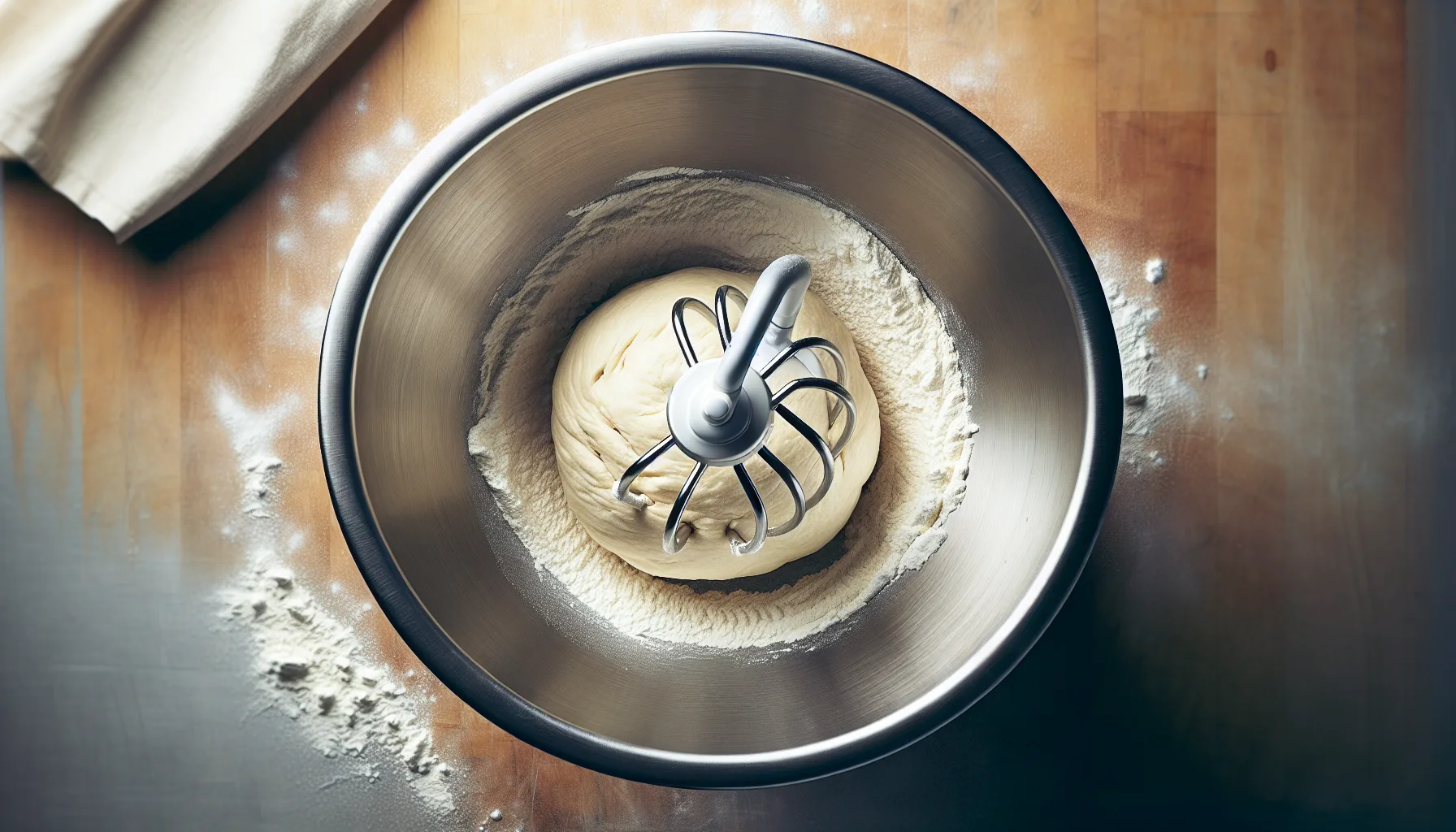
If you’re going to make bread every week, the Chef XL Titanium is a better machine than the Artisan at a similar price. The 6.7L bowl swallows 2kg bread doughs for breakfast, the motor is unfazed, and the KAX Twist attachment range has caught up nicely on the pasta/mincer front.
What we like
- Handles serious dough — we’ve kneaded 2kg loaves with no motor strain
- Bigger bowl for the same money — 6.7L vs the Artisan’s 4.8L
- In-bowl illumination — sounds gimmicky, you won’t go back
- Planetary mixing action is fractionally more thorough than the KitchenAid’s on our pavlova test
What we don’t
- It’s big. Depth of 34cm means it won’t tuck under every wall cabinet
- Plastic trim on the speed dial feels cheaper than the KitchenAid’s metal
- Resale value is lower — if you change your mind in 2028 you’ll lose more money
Who it’s for: the weekly bread baker, the big-family cook, anyone who’s ever run out of bowl space mid-recipe. It’s a real step up from the Artisan for bread — we just can’t quite love it the same way. Currys usually has it at the keenest price.
Best Design: Smeg SMF03
- Around £449-549
- 4.8L bowl
- 800W
- Tilt-head
- 10 speeds
The Smeg is the one you buy because you want it on display. It’s heavier and more solidly built than it looks, the 50s-retro styling actually works in a Shaker kitchen, and the performance is perfectly respectable — it’ll handle anything short of heavy bread batches.
What we like
- Looks the part — cream, pastel blue, pastel pink or matte black are all gorgeous in person
- 800W motor copes with most doughs without complaint
- Die-cast aluminium body makes it feel premium, not plasticky
- Quiet compared to the KitchenAid, which matters in open-plan kitchens
What we don’t
- Price — you’re paying a premium for the styling
- Bowl attaches with a twist-lock that feels fiddlier than the KitchenAid’s
- The attachment ecosystem is smaller — fewer pasta/mincer options
Who it’s for: people who want a stand mixer that earns its worktop real estate on looks alone. Truthfully — if you know you’ll use it twice a month for cakes, and you know the KitchenAid would stress you out because it doesn’t match your tap, the Smeg is the right answer. No judgement.
Best Budget: Andrew James / Tower Classic
- Around £60-110
- 5L bowl
- 1000W claimed
- Tilt-head
- 6 speeds
Look — if £200 is your ceiling, you can still get a usable stand mixer. The Andrew James 5.2L and the Tower T12033 are both competent machines at the £80-110 mark. They won’t outlast the KitchenAid, but if you’re a student, a first-flat renter, or you just bake every few months, they’ll do the job for three or four years.
What we like
- Cheap enough to replace without pain if it dies in year three
- 5L bowl is surprisingly generous for the money
- Splash guards included in the box (the KitchenAid’s is £25 extra)
What we don’t
- Gearbox noise is noticeably louder than the KitchenAid
- Stiff doughs can make the motor struggle — stick to cakes, biscuits and soft doughs
- Plastic housing will scuff and scratch
- Resale value: basically zero
Who it’s for: the occasional baker, the cash-strapped student kitchen, the holiday home. Don’t kid yourself — you’re buying a machine that’ll do the job, not one that’ll become a family heirloom. Amazon UK or Argos are the usual suspects.
Best Premium: KitchenAid Professional 6.9L Bowl Lift
- Around £699-849
- 6.9L bowl
- 500W (high-torque DC motor)
- Bowl-lift
- 10 speeds
The Pro 600 (as US bakers call it) is what you graduate to when the Artisan starts feeling small. The bowl-lift mechanism, bigger bowl and direct-drive motor make it meaningfully better for serious bread work, enriched doughs and big bakes. It also weighs 13kg, so don’t plan on moving it.
What we like
- Direct-drive DC motor handles 1.4kg of bread dough without blinking
- Bowl-lift cranks up to the beater with reassuring solidity
- 6.9L bowl comfortably does 8-10 loaves of bread at once
- Takes the same PowerHub attachments as the Artisan — your pasta roller still fits
What we don’t
- Expensive. Unless you bake a lot, the Artisan’s the better buy
- Tall — you need 45cm+ of vertical clearance, which rules out most under-cupboard spots
- Hefty — 13kg means it’s not something you’ll lift down weekly
Who it’s for: the serious bread baker, the family baking for six, the allotment-holder preserving a year’s worth of fruit. If you bake bread every weekend without fail, this is worth the extra £250-300 over the Artisan. For everyone else, it’s overkill.
Best Compact: Bosch MUM5 / Kenwood kMix
- Around £179-299
- 3.9-5L bowl
- 900W (Bosch)
- Varies
- 4-7 speeds
Small UK kitchens are real. If your worktop is already fighting with a kettle, toaster, coffee grinder and air fryer, a full-size KitchenAid simply isn’t going in. Both the Bosch MUM5 and the Kenwood kMix shave 8-10cm off the depth and still do 90% of what a full-size machine does.
What we like
- Footprint is actually reasonable — fits on most worktops under wall cabinets
- 900W motor on the Bosch easily outperforms what the wattage war suggests
- kMix styling is nicely minimal — looks more expensive than it is
- Lighter — 5-6kg means you can lift it out of a cupboard
What we don’t
- Smaller bowl (3.9-5L) limits batch size — one loaf, not three
- Fewer attachments across the range
- kMix build quality is a step below the Chef — more plastic, less metal
Who it’s for: anyone in a London flat, a static caravan, or a galley kitchen. The Bosch MUM5 is the one we’d pick first — noticeably more powerful than the kMix and often £50 cheaper at Currys.

Stand Mixer vs Hand Mixer: Which Do You Need?
Be honest about how often you’ll actually bake. A hand mixer costs £25-60, weighs 800g, lives in a drawer, and handles cake batter, whipped cream, meringue and mashed potato without complaint. For the occasional baker, it might be all you need.
The stand mixer earns its worktop space when:
- You make bread at least fortnightly — kneading by hand for 10 minutes gets old fast
- You bake every weekend — hands-free mixing means you can measure ingredients for the next step
- You make pasta, mince your own meat, or preserve fruit — the attachments are the real value
- You’re physically limited by hand, wrist or shoulder issues — the NHS notes that reducing repetitive manual strain matters for anyone with RSI or arthritis, and a stand mixer is a practical kitchen adjustment
If none of those apply, a good hand mixer plus a £20 Kenmix HM will handle most baking jobs at a fraction of the cost and storage hassle. There’s no shame in that.
Where to Buy in the UK
Stand mixers are one of the few categories where the retailer really matters — warranty, delivery damage, and price-match all vary wildly.
- John Lewis — best guarantee cover (2 years default on most KitchenAids), price-matches most competitors, and their delivery teams will unbox and check for damage if you ask
- Currys — the keenest prices on Kenwood and Bosch, especially during Black Friday and spring sales
- Lakeland — smaller range, but their customer service is outstanding if anything goes wrong
- Amazon UK — cheapest for budget brands (Andrew James, Tower), but be wary of third-party sellers on premium machines
- KitchenAid UK direct — occasional refurbished stock at 20-30% off, with full 5-year warranty
- Which? — not a retailer, but their independent stand mixer reviews are worth the membership fee before you spend £400+
One thing to watch: KitchenAid colourways vary in price by £100+ depending on popularity. Empire Red, White and Onyx Black are usually the cheapest. Pistachio, Matte Black and any pastel will cost you extra.
Keep reading on KitchenGearUK: Best Bread Makers 2026 UK: Sourdough, Gluten-Free & More, KitchenAid vs Kenwood vs Smeg: Stand Mixer Showdown, Stand Mixer Bread Recipes: From Sourdough to Brioche, Planetary vs Spiral Mixers: What’s the Difference?.
Frequently Asked Questions
Is a KitchenAid actually worth the money? Yes, if you bake weekly. The Artisan holds 70% of its value after five years, the attachment ecosystem is unmatched, and the build quality lasts 15+ years. If you bake once a month, it’s overkill — a £100 Tower or a good hand mixer will do.
What size stand mixer do I need for a family of four? A 4.8L bowl (like the KitchenAid Artisan) handles most family recipes comfortably — one large cake, 2-3 loaves of bread, or enough cookie dough for 40 biscuits. If you batch-bake or host often, step up to a 6L+ machine like the Kenwood Chef XL.
Can cheap stand mixers handle bread dough? Softer doughs, yes. Stiff bread or pizza doughs, no — you’ll hear the motor labouring and the gearbox will wear out fast. If bread is your main reason for buying, spend at least £250-300 for a machine with a real gearbox and metal gears, not plastic.
KitchenAid Artisan vs Professional — which should I get? The Artisan (4.8L, tilt-head) is right for 90% of home bakers. Choose the Professional (6.9L, bowl-lift) only if you bake bread weekly, make huge batches, or want the added motor headroom. The Professional is taller and heavier — measure your under-cupboard clearance before buying.
Are Kenwood and KitchenAid attachments interchangeable? No. Each brand has its own attachment hub. KitchenAid’s PowerHub has been unchanged since the 1930s, so any old accessory still fits new machines. Kenwood’s KAX Twist fitting (current) replaced the older AT Bar system, so some older Kenwood attachments won’t fit new Chef XLs — check carefully before buying second-hand.
How long should a stand mixer last? A well-made KitchenAid, Kenwood Chef or Smeg should last 15-20 years with normal home use. Budget machines typically give 3-5 years before the gearbox starts to slip or the motor burns out. You’re really paying for the gearbox and housing — not the motor specs on the box.