You’ve just unboxed your new stand mixer, tipped the box upside down, and three metal attachments have tumbled onto the worktop. They all look vaguely medieval. Even KitchenAid’s own guide doesn’t make it obvious which to use when. One’s a hook, one’s a paddle, one’s a whisk — but which do you actually reach for when you’re making bread? Or buttercream? Or that pizza dough recipe you bookmarked three months ago? Most people grab whichever attachment looks right and hope for the best. That approach works until you’ve overworked your cookie dough with a whisk or tried to knead bread with a flat beater. With stand mixer attachments explained properly, you’ll know exactly which tool to clip on every time — and your baking will be noticeably better for it.
Every stand mixer from KitchenAid, Kenwood, Sage, and Smeg ships with the same core trio of attachments. They aren’t interchangeable, and using the wrong one doesn’t just give worse results — it can actually damage the mixer’s motor over time. Here’s what each one does, when to use it, and the mistakes to avoid.
The Flat Beater (K-Beater or Paddle Attachment)
This is the attachment you’ll use most often. It’s the wide, paddle-shaped piece — sometimes called the K-beater because of its shape (look at it side-on and you’ll see the K). On Kenwood mixers, it’s often labelled the “K-hook” which adds to the confusion, but it works the same way.
The flat beater’s job is general mixing. It combines ingredients without incorporating too much air and without overdeveloping gluten. Think of it as the all-rounder.
When to Use the Flat Beater
- Cake batter — Victoria sponge, chocolate cake, carrot cake. The beater creams butter and sugar together, then folds in flour without overworking it
- Buttercream and frostings — gets everything smooth without whipping in excess air (unless you want a fluffy American-style buttercream, in which case let it run a bit longer)
- Cookie dough — mixes butter, sugar, and flour into a cohesive dough. Stop as soon as the flour disappears or you’ll get tough biscuits
- Mashed potato — a controversial one. Works brilliantly for smooth mash, but run it too long and you’ll get wallpaper paste. Thirty seconds on low speed, no more
- Pastry — rubs butter into flour quickly and keeps everything cold, which is half the battle with shortcrust
- Meatloaf and burger mixes — combines everything evenly without you having to squish raw mince between your fingers
Flat Beater Tips
Run it on low to medium speed for most jobs. If your mixer is bouncing on the worktop, the speed is too high. For creaming butter and sugar, start on low until combined, then bump to medium for 3-4 minutes until the mixture turns pale and fluffy.
One thing worth knowing: the flex edge beater (sometimes called the scraper beater) is a flat beater with a silicone edge that scrapes the bowl as it turns. KitchenAid sells one for about £30 from Amazon UK, and it genuinely saves you stopping the mixer to scrape down the sides every minute. If you bake regularly, it’s the first accessory worth buying.
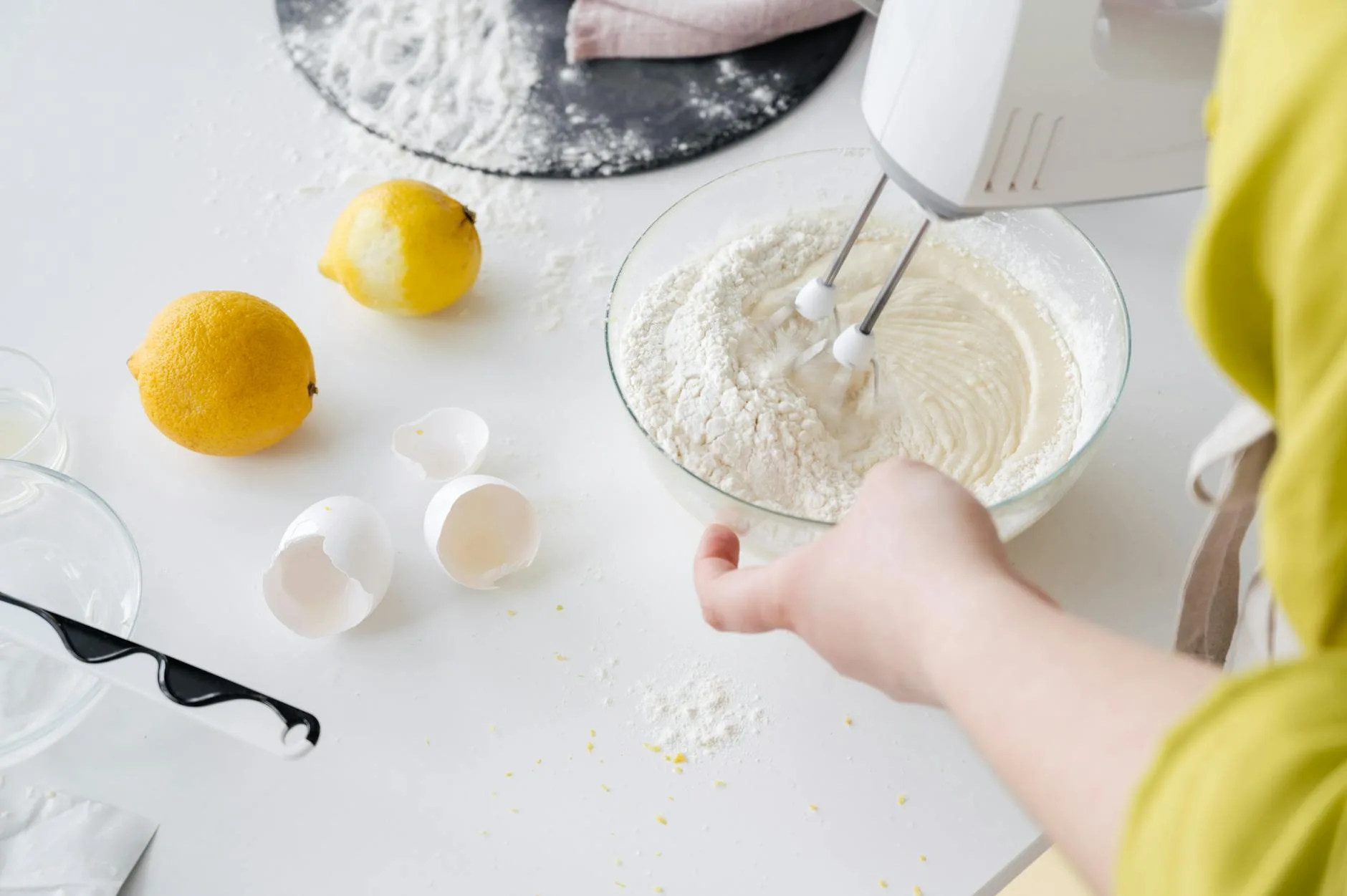
The Dough Hook
The dough hook looks exactly like what it sounds like — a thick, curved hook. Some brands use a C-shaped hook (KitchenAid Artisan, for example), while others like Kenwood use a spiral hook on their bigger models. Both knead dough, but spiral hooks handle larger batches more efficiently.
This attachment replaces hand-kneading. It stretches and folds dough to develop gluten, which is what gives bread its structure and chew. If you’ve ever spent ten minutes kneading bread dough by hand and ended up with aching forearms and a sticky mess, the dough hook is about to change your weekends.

When to Use the Dough Hook
- Bread dough — white, wholemeal, sourdough, rolls. Anything that needs gluten development
- Pizza dough — including high-hydration Neapolitan-style dough that’s almost impossible to knead by hand without it sticking everywhere
- Bagels — stiff, dense dough that’s really hard work to knead manually
- Enriched doughs — brioche, hot cross buns, cinnamon rolls. These contain butter and eggs which make them sticky and slow to come together
- Pasta dough — the hook brings it together nicely, though you’ll still need to finish kneading by hand for a minute or two
Dough Hook Tips
Speed is critical here. Always use low speed — that’s speed 1 or 2 on most mixers. Running the dough hook fast doesn’t knead faster; it just makes the mixer walk across your worktop and puts unnecessary strain on the motor. KitchenAid’s own guidelines say never to exceed speed 2 for dough, and there’s a reason for that. Mixer repairs aren’t cheap — a replacement gearbox from a KitchenAid service centre runs about £150-200.
Kneading time varies. A basic white bread dough takes about 8-10 minutes on speed 2. Enriched doughs like brioche can take 15 minutes or more because the butter and fat slow down gluten development. The windowpane test is your friend here: pull off a small piece of dough and stretch it thin. If you can see light through it without it tearing, the gluten is developed enough.
One thing that trips people up: the dough hook won’t mix dry ingredients into wet ones at the start. If you dump flour, yeast, and water in and turn on the hook, you’ll have a hook spinning in the middle while dry flour sits untouched around the edges. Use the flat beater on low for 30 seconds to bring it together first, then switch to the dough hook.
The Wire Whisk
The balloon whisk — the one that looks like a cage made of thin wires — is all about air. It incorporates as much air as possible into whatever you’re whisking. If the flat beater is the all-rounder and the dough hook is the muscle, the whisk is the specialist.
When to Use the Wire Whisk
- Egg whites for meringue — from liquid to stiff, glossy peaks in about 5-6 minutes. Make sure the bowl is spotlessly clean and there’s no trace of yolk, or the whites won’t whip properly
- Whipped cream — double cream to soft peaks in 2-3 minutes. Watch it carefully though. There’s about a 30-second window between perfect whipped cream and butter. Ask me how I know
- Swiss meringue buttercream — whisks the warm meringue until cool and fluffy before you start adding butter
- Sponge batter (genoise) — whole eggs and sugar whisked until thick and mousse-like, then flour folded in. The whisk does the heavy lifting
- Mousse bases — any recipe that needs a light, airy egg mixture
- Royal icing — whips to the right consistency for piping and flooding
Wire Whisk Tips
Start on low speed and increase gradually. Cranking straight to high just flings everything up the sides of the bowl. For egg whites, start on speed 4 until foamy, then increase to speed 8 for stiff peaks.
The wire whisk is the most fragile of the three standard attachments. Don’t use it for anything thick or heavy — no cookie dough, no bread dough, not even a stiff royal icing. You’ll bend the wires, and replacement whisks cost £15-25 depending on the brand.
A clean, dry bowl matters more with the whisk than any other attachment. Even a tiny bit of grease will stop egg whites from whipping. Some bakers wipe the bowl with a cut lemon before whisking whites — the acid cuts through any residual fat. It works.
Beyond the Big Three: Optional Attachments Worth Knowing About
The three standard attachments cover most kitchen tasks, but stand mixers are designed as a power source for a whole ecosystem of optional extras. Some are really useful; others gather dust after one use. Here’s an honest breakdown.
Pasta Roller and Cutter Sets
These clip onto the power hub at the front of the mixer and roll fresh pasta sheets, then cut them into spaghetti, fettuccine, or linguine. KitchenAid’s three-piece set costs about £120-160 from John Lewis or Amazon UK. Kenwood’s equivalent is in a similar range.
They work well. Fresh pasta is noticeably better than dried, and once you’ve made it a few times the whole process takes about 30 minutes. The rollers are particularly good — you feed the dough through repeatedly, reducing the thickness each time, and the motor does all the work. If you’re making pasta by hand with a manual roller, the motorised version is a serious upgrade.
Worth buying if you’ll make pasta at least once a month. If it’s a twice-a-year novelty, a £25 manual pasta machine from Amazon UK does the same job with more effort.
Food Grinder and Sausage Stuffer
Turns your mixer into a meat grinder. Feed chunks of pork shoulder, beef, or whatever you fancy into the hopper and it comes out minced. Add the sausage stuffer attachment and you’re filling casings.
Sounds niche, but home-ground mince is in a different league to supermarket stuff. You control the fat content, the texture (coarse or fine), and you know exactly what’s in it. A KitchenAid food grinder attachment runs about £50-70.
Spiraliser
Turns courgettes, sweet potatoes, and beetroot into noodles or spirals. About £80-100 for the KitchenAid version. Useful if you eat a lot of vegetable-based meals. If you’re already happy with a £10 handheld spiraliser from Lakeland, the powered version is faster but not essential.
Ice Cream Maker Bowl
A frozen bowl that churns ice cream using the mixer’s paddle. About £70-90. You need to freeze the bowl for at least 15 hours beforehand, which means planning ahead. The results are good — proper churned ice cream with a smooth texture — but a dedicated ice cream maker gives more consistent results if you’re making it regularly.
Citrus Juicer
Exactly what it sounds like. Reams oranges, lemons, and grapefruits. About £30-40. truthfully, a £5 manual juicer does the same job for most people unless you’re juicing a full bag of oranges for a brunch.
Common Mistakes with Stand Mixer Attachments
Even once you’ve got stand mixer attachments explained and understand which does what, there are a few mistakes that catch people out regularly.
Using the wrong speed. This is the big one. The dough hook on high speed will overheat the motor. The whisk on high speed in a half-full bowl will spray cream up the walls. Most tasks work best starting on low and increasing gradually.
Not adjusting the beater height. Every stand mixer has a screw (usually under the hinge) that lets you raise or lower the attachment. If the flat beater isn’t reaching the bottom of the bowl, it’s leaving unmixed ingredients behind. If it’s scraping the bottom, it’ll wear through the coating. The test: put a flat beater in and turn it by hand. It should just barely clear the bottom — a 10p coin’s thickness.
Overloading the mixer. Every mixer has a flour capacity — typically 500g-900g for home models. Exceeding it puts strain on the motor and the gears. The KitchenAid Artisan handles about 650g of flour comfortably. If you regularly bake in larger batches, the KitchenAid Professional or Kenwood Chef XL with their bigger bowls and stronger motors are worth the step up — expect to pay £400-550 from Currys or John Lewis.
Running the whisk in a stainless steel bowl for meringue. This isn’t actually a mistake — stainless is fine. The old myth about copper bowls being essential for meringue has some science behind it (copper ions stabilise egg white proteins), but a pinch of cream of tartar achieves the same thing. What does matter is that the bowl is completely grease-free.
Not locking the head properly. If the mixer head isn’t fully locked down, it vibrates loose during heavy jobs like bread dough. You’ll hear it — a rhythmic clunking that sounds expensive. Stop, lock the head, carry on.
Choosing Attachments for Different Brands
Not all attachments are interchangeable between brands. KitchenAid attachments only fit KitchenAid mixers. Kenwood attachments only fit Kenwood. Some third-party manufacturers make compatible attachments — particularly for KitchenAid — but check the specific model number before buying.
- KitchenAid — the widest range of optional attachments. Over 15 available, from pasta rollers to grain mills. All KitchenAid stand mixers (Artisan, Mini, Professional) use the same power hub, so attachments work across the range
- Kenwood — strong attachment ecosystem too, including food processors and blenders that mount directly. The Chef and Chef XL ranges share most attachments
- Sage (Breville in the US) — fewer optional attachments available, but the standard three are high quality
- Smeg — mostly focused on the standard three. Limited optional attachment range compared to KitchenAid or Kenwood
If you’re still deciding which stand mixer to buy, the attachment ecosystem is worth factoring in. A KitchenAid Artisan at about £350-400 with a wide range of add-ons gives you more flexibility than a cheaper mixer that only does the basics. For a deeper dive into what makes a good chopping board to prep your ingredients on, we’ve covered that separately.
Looking After Your Attachments
The standard metal attachments are durable but not indestructible.
- Hand wash the whisk. The cage shape traps food that the dishwasher won’t always reach, and the repeated heat cycles can discolour the metal
- Dry the dough hook thoroughly after washing. Water trapped in the socket where it connects to the mixer can cause rust spots over time
- Don’t soak coated flat beaters for hours. The coating can eventually degrade, especially on cheaper third-party versions
- Store attachments in a drawer or container, not rattling around loose in a cupboard where the whisk wires get bent
For the mixer itself, wipe down the body after each use — especially around the attachment hub where flour and butter accumulate. A damp cloth is all you need. The bowl is usually dishwasher-safe, but check your manual. Some stainless steel bowls develop a dull film from dishwasher detergent over time.
For brand-specific compatibility, check Which? food mixer buying advice before buying mixer accessories for an older or less common model.
Keep reading on KitchenGearUK: Stand Mixer Bowl Sizes Explained: What Capacity Do You Need?, How to Make Bread with a Stand Mixer, Best Stand Mixers 2026 UK: KitchenAid, Kenwood & Smeg, Best Bread Makers 2026 UK: Sourdough, Gluten-Free & More.
Frequently Asked Questions
Can I use the dough hook for cake batter? You can, but you shouldn’t. The dough hook develops gluten, which makes bread chewy but makes cake tough and dense. Use the flat beater for cake batter — it mixes without overworking the flour.
Why does my mixer walk across the worktop when kneading? The speed is too high. Dough should always be kneaded on speed 1 or 2. If it still moves, check the suction cup feet on the base — they may need cleaning or replacing. Placing a damp tea towel under the mixer can also help.
Do KitchenAid attachments fit Kenwood mixers? No. Stand mixer attachments are brand-specific and not interchangeable. KitchenAid attachments only fit KitchenAid mixers, and the same applies to Kenwood, Sage, and Smeg. Always check the model number before buying replacement or optional attachments.
Is a flex edge beater worth buying? If you bake regularly, yes. The silicone scraper edge means you don’t have to stop the mixer every minute to scrape down the bowl sides. It costs about £30 for a KitchenAid version and really saves time and mess.
Can I put stand mixer attachments in the dishwasher? The flat beater and dough hook are usually dishwasher-safe, though hand washing is gentler on the finish. The wire whisk should always be hand washed — the cage shape traps food that the dishwasher misses, and repeated heat cycles can discolour the wires.