You’ve just committed to making smoothies every morning. Maybe it was a New Year’s resolution, maybe your GP mentioned something about fibre, or maybe you watched one too many Instagram reels of someone blitzing spinach into something that actually looked drinkable. Either way, you’re standing in Currys or scrolling through Amazon UK, and every blender claims to be the best — Which? tests blenders rigorously, but even their ratings don’t tell the whole story. Some cost £30. Some cost £500. And you have no idea whether you need 1,000 watts or 2,000, a jug blender or a bullet-style, glass or plastic.
Here’s the thing — most people either overspend on features they’ll never use, or they go cheap and end up with a machine that can’t handle a frozen banana without sounding like a jet engine having a breakdown. Neither is ideal. This guide will help you figure out exactly what you need based on how you actually make smoothies, not how some manufacturer’s marketing team thinks you should.
The Quick Answer: What Most People Should Buy
If you want to skip the detail and just get blending, a Nutribullet 600 Series (about £50 from Argos or Amazon UK) handles daily smoothies brilliantly. It blends frozen fruit, leafy greens, and protein powder without fuss, it’s compact enough for a small kitchen worktop, and you drink straight from the blending cup. For most people making one or two smoothies a day, it’s the sweet spot of price, performance, and convenience.
But “most people” might not be you. If you’re blending for a family, adding tough ingredients like nuts and dates, or want a machine that doubles as a soup maker, you’ll need something different. That’s where understanding how to choose a blender for smoothies properly pays off.
Types of Blender — and Which Suits Your Smoothie Habit
Not all blenders are built for the same job. The type you pick matters more than the wattage number on the box.
Bullet-Style Personal Blenders
These are the compact ones — Nutribullet, Ninja Personal, Breville Blend Active. You load ingredients into a cup, twist on the blade assembly, blend, then swap to a drinking lid and take it with you.
- Best for: one or two people, quick morning smoothies, small kitchens
- Capacity: typically 500-900ml per cup
- Price range: £25-80
- Limitations: struggle with large batches, not great for very hard ingredients like ice cubes from a standard freezer tray
The Nutribullet 600 is the default recommendation here for good reason. The Ninja Nutri-Ninja (about £40) is a solid budget alternative that handles frozen berries well, though the cups feel slightly cheaper. The Breville Blend Active (around £25 from Argos) is fine for soft-fruit smoothies but chokes on anything frozen solid.
Full-Size Jug Blenders
The traditional countertop blender with a 1.5-2 litre jug. Brands like Kenwood, Sage, KitchenAid, and Ninja dominate this space in the UK.
- Best for: families, batch-making, versatility (soups, sauces, crushing ice)
- Capacity: 1.4-2 litres
- Price range: £40-250
- Limitations: take up more worktop space, more washing up, overkill if you’re just making one smoothie
The Ninja Professional BN750UK (about £80 from Currys) is excellent value — 1,100 watts, stacked blade design that handles frozen fruit and ice without drama. At the premium end, the Sage Super Q (around £450 from John Lewis) is absurdly powerful and whisper-quiet by comparison, but that’s a lot of money for smoothies unless you’re also making nut butters and hot soups from scratch.
High-Performance Blenders
Think Vitamix and Sage (Breville’s UK brand). These are 1,400-2,200 watt machines designed to pulverise anything.
- Best for: serious daily blenders, anyone who wants silky-smooth results with fibrous greens or seeds, people who’ll also make soups, dips, and nut milks
- Price range: £250-600
- Limitations: expensive, loud (though less so than cheap blenders struggling with the same task), large footprint
The Vitamix Explorian E310 (about £290 from Amazon UK or direct) is the entry point into serious blending. It’ll turn kale stems into silk and handles hot soup blending too. The motor has a 5-year warranty, and Vitamix machines routinely last a decade or more. If you’re blending daily and want something that just works every single time, this is where I’d put my money.
How to Choose a Blender for Smoothies: The 5 Things That Actually Matter
Forget the 15-point comparison charts. For smoothie-making, five factors determine whether you’ll love or abandon your blender within a month.
1. Motor Power — But Not How You Think
Wattage is the number everyone fixates on, and it’s the least useful metric in isolation. A 1,000-watt blender with a well-designed blade and jug shape will outperform a 1,500-watt machine with a poorly angled blade every time.
That said, here are rough minimums for smoothie ingredients:
- Soft fruit only (banana, mango, berries): 300 watts is enough
- Frozen fruit and ice: 600 watts minimum, 900+ preferred
- Leafy greens, nuts, seeds, dates: 1,000+ watts for smooth results
- Everything including fibrous veg and nut butters: 1,400+ watts
The real test isn’t peak wattage — it’s whether the blender can sustain power under load without the motor overheating. Cheap blenders often hit their claimed wattage briefly, then thermal-throttle. You’ll notice this as the blending slowing down mid-cycle. Better brands maintain consistent speed.
2. Blade Design and Jug Shape
This is where the engineering actually lives. A good blender creates a vortex — ingredients get pulled down into the blades, blended, pushed up the sides, and cycled back down. If the jug is too wide at the base or the blades are flat, ingredients just spin around the edges and you end up pushing them down with a spatula every 30 seconds.
- Stacked blades (Ninja’s signature design) work well for chunky ingredients
- Angled blades in a tapered jug (Nutribullet, Vitamix) create better vortex action
- Flat blades in wide jugs (many cheap blenders) = poor circulation, uneven results
3. Capacity — Match It to Your Actual Use
A 2-litre jug sounds great until you realise you’re making 400ml smoothies and washing a massive container every time. Equally, trying to make smoothies for three kids in a 500ml personal blender means three separate batches every morning.
Think about your typical batch:
- Just you: 400-600ml — a personal blender is perfect
- You and a partner: 800ml-1 litre — a large personal blender or small jug works
- Family of four: 1.5 litres minimum — you need a jug blender
4. Cleaning Convenience
This is the thing that separates blenders people use daily from blenders that end up in a cupboard by February. If it’s annoying to clean, you won’t use it. Simple as that.
- Personal blenders win here — rinse the cup, done. Most cups are dishwasher-safe too.
- Jug blenders vary hugely. The self-clean trick (warm water + drop of washing-up liquid, blend for 30 seconds) works on most, but some have awkward blade assemblies that trap food.
- Removable blade assemblies are easier to deep-clean but slightly more faff day-to-day
- Fixed blades (Vitamix) are easier for daily use but need the self-clean method
5. Noise Level
Every blender is loud. Let’s get that out of the way. But there’s a difference between “loud appliance” and “waking the baby upstairs” loud. If you’re blending at 6am while the house is asleep — and let’s face it, that’s when most smoothie-making happens — noise matters.
Budget blenders (under £50) typically hit 85-95 decibels. That’s lawnmower territory. Premium blenders like the Sage Super Q have sound enclosures that bring it down to around 75 decibels, which is noticeable. The Vitamix Explorian sits somewhere in the middle — loud, but it blends so fast you’re done in 30-40 seconds.
There’s no such thing as a quiet powerful blender. But a faster blend cycle means less total noise time, which is its own kind of quiet.
Common Smoothie Ingredients and What They Demand From Your Blender
Not all smoothies are created equal. A banana-and-yoghurt smoothie is a completely different blending challenge from a kale-and-frozen-mango green smoothie. Here’s what your favourite ingredients actually need:
Easy — Any Blender Handles These
- Fresh banana, mango, avocado — soft, breaks down instantly
- Yoghurt, milk, plant milks — liquid, no resistance
- Protein powder — dissolves with minimal blending
- Honey, nut butters — blend in easily once liquid gets moving
Medium — Need 600+ Watts
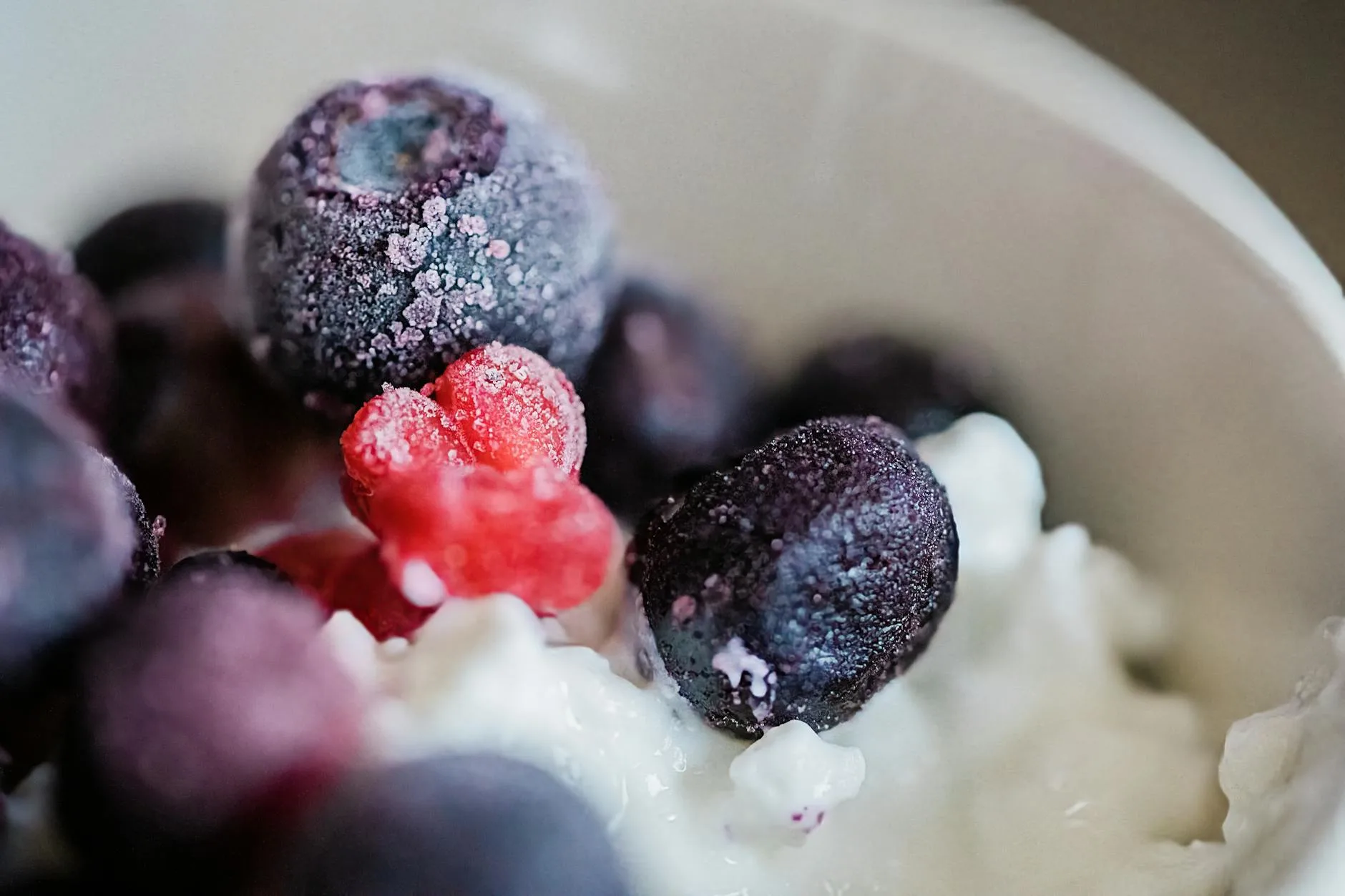
- Frozen berries — the single most common smoothie ingredient that cheap blenders struggle with. Frozen raspberries and blueberries are small and hard; they need genuine power or pre-thawing for 5 minutes.
- Frozen banana chunks — harder than you’d think. Slice bananas before freezing and you’ll make life easier for any blender.
- Spinach and soft leafy greens — blend down easily but can leave fibrous strings in weak blenders
- Ice cubes — standard freezer ice needs 800+ watts to crush properly. Some blenders specifically say “not suitable for ice” — believe them.
Demanding — Need 1,000+ Watts
- Kale, cavolo nero, tough greens — fibrous stems need serious power for a smooth result
- Dates and dried fruit — sticky, dense, and will stall a weak motor
- Raw nuts and seeds (whole) — cashews and almonds need real power; chia and flax seeds are easier
- Frozen açaí packs — rock-hard straight from the freezer, snap them into pieces first regardless of your blender
- Ginger root — fibrous; a small piece is fine in most blenders, but large chunks need power
Glass vs Plastic vs Tritan — Does the Jug Material Matter?
Short answer: yes, but not as much as marketing suggests.
- Standard plastic — lightweight, cheap, scratches easily, can retain smells and stains from turmeric or beetroot smoothies. Found on most budget blenders.
- Tritan (BPA-free copolyester) — what most mid-range and premium blenders use. Lightweight like plastic but much more durable, scratch-resistant, and doesn’t retain odours. Nutribullet cups and Vitamix jugs use Tritan.
- Glass — heavy, doesn’t scratch or stain, feels premium, but adds significant weight and will shatter if you drop it. Some KitchenAid and Kenwood models use glass jugs.
For smoothies specifically, Tritan is the sweet spot. It’s light enough to handle one-handed, tough enough to last years, and won’t turn orange after your first carrot-ginger smoothie.
What About Smoothie Makers vs Blenders?
You’ll see some products marketed specifically as “smoothie makers” — often with a tap on the jug. These are just blenders with a dispensing feature. The tap is handy if you’re pouring multiple glasses, but it’s another thing to clean and another seal that can eventually leak.
Don’t pay extra just because something says “smoothie maker” on the box. A good blender makes smoothies. That’s what blenders do. The smoothie maker label is marketing, not a meaningful product category.
Budget Breakdown: What You Get at Each Price Point
Under £40
Basic personal blenders and entry-level jugs. Fine for soft fruit smoothies. Will struggle with frozen ingredients and won’t last as long. The Ninja Nutri-Ninja at about £40 is the best in this range — it punches above its weight.
£40-80
The sweet spot for most people. Decent personal blenders and solid jug blenders live here. The Nutribullet 600 (£50) and Ninja Professional BN750UK (£80) are the standouts. Both handle frozen fruit, greens, and daily use without complaint.
£80-200
Better build quality, more powerful motors, and extras like multiple speed settings, preset programmes, and larger jugs. The Nutribullet Pro 900 (about £90) adds more power for tougher ingredients. The Ninja 2-in-1 (around £130) gives you both a jug and personal cups, which is brilliant if you can’t decide between the two styles.
£200+
Premium territory. The Vitamix Explorian E310 (£290), Sage Super Q (£450), and Vitamix A3500 (£600+) live here. These are for people who blend daily, want flawless results, and plan to keep the machine for 5-10+ years. The per-use cost over a decade actually makes these reasonable — a Vitamix at £290 used daily for 7 years works out at about 11p per use.
Tips for Getting the Best Smoothies From Any Blender
Even the right blender needs the right technique. A few things I’ve learned that make a real difference:
- Liquid first. Always put your liquid (milk, water, juice) in before the solid ingredients. This helps the blade engage properly and prevents air pockets.
- Soft ingredients next, frozen last. Layer soft fruit and greens in the middle, frozen stuff and ice on top. This creates better flow.
- Don’t overfill. Leave at least 2-3cm of space at the top. Overfilling causes leaks and uneven blending.
- Pre-slice frozen bananas. Whole frozen bananas are a blender’s worst enemy. Slice them into coins before freezing and store in a bag — they’ll blend faster and put less strain on the motor.
- Pulse first, then blend. Start with 3-4 short pulses to break up large frozen pieces, then switch to continuous blending. This extends motor life.
- The tamper trick (Vitamix/Sage). If your blender comes with a tamper, use it. Pushing ingredients into the blade vortex while blending makes a huge difference with thick smoothies and bowls.
Looking After Your Blender
A blender that’s cleaned properly and not abused will last years. Here’s how to keep yours going:
- Clean immediately after use. Don’t let smoothie residue dry — it’s ten times harder to remove. Fill with warm water and a drop of washing-up liquid, blend for 30 seconds, rinse.
- Don’t run it dry. Always have liquid in the jug before blending. Running blades with no liquid generates excess heat and wears the seals.
- Replace seals and gaskets. These wear out. If your blender starts leaking from the base, it’s usually a £5-8 gasket replacement, not a new blender. Check the manufacturer’s website for spares.
- Don’t blend boiling liquids in plastic jugs. Wait until soup has cooled slightly. Vitamix and other premium blenders are rated for hot liquids; most budget blenders are not.
If you’re after more ideas on equipping your kitchen, our guide to coffee machine types explained covers another appliance that earns its worktop space. And if you’re thinking about which kitchen tools are genuinely worth the investment, the breakdown of stand mixer attachments is worth a look — especially the food processor attachment that some people use instead of a blender.
For nutrition context, the NHS 5 A Day guidance is useful when deciding how smoothies fit into a broader fruit-and-veg routine.
Keep reading on KitchenGearUK: How to Make Smoothie Bowls with a Blender, Blender Wattage Explained: Does More Power Mean Better?, Best High-Speed Blenders 2026 UK: Vitamix, Ninja & More, Juicing for Beginners: What Fruits and Vegetables to Start With.
Frequently Asked Questions
How many watts do I need for a smoothie blender? For soft fruit smoothies, 300 watts is sufficient. For frozen fruit and ice, aim for at least 600 watts. If you regularly blend tough greens like kale, nuts, or dates, 1,000 watts or more will give you consistently smooth results.
Is a Nutribullet or Vitamix better for smoothies? A Nutribullet (around £50) is excellent for daily single-serve smoothies with frozen fruit and greens. A Vitamix (from £290) delivers noticeably smoother results with tough ingredients and lasts much longer, but costs notably more. For most people, a Nutribullet is all you need.
Can I put ice in a blender? Yes, but check your blender is rated for it. You need at least 800 watts for standard ice cubes. Some budget blenders explicitly state they’re not suitable for ice crushing — using ice in these can damage the blades and motor. Pulse mode helps break ice down gradually.
How long should a blender last? Budget blenders (under £50) typically last 1-3 years with daily use. Mid-range models (£50-150) last 3-5 years. Premium blenders like Vitamix and Sage often last 7-10+ years and come with extended warranties of 5-10 years.
Are personal blenders as good as jug blenders for smoothies? For single-serve smoothies, personal blenders are often better — they blend efficiently in smaller portions and are far easier to clean. Jug blenders are better for batch-making or family-sized smoothies. The blending quality at the same price point is comparable.