You’ve seen the Instagram posts — vibrant green juices, jewel-coloured beet blends, that person at the office who swears their morning carrot juice cleared up their skin. You bought a juicer in January, made three juices, discovered that cleaning it takes longer than drinking it, and the machine has been sitting on the worktop collecting dust ever since. This is the most common juicing trajectory in the UK, and it’s entirely preventable.
The trick isn’t complicated recipes or expensive organic produce. It’s knowing which fruits and vegetables actually taste good when juiced, which combinations work together, and which ones will make you pull a face and pour the whole thing down the sink. After two years of daily juicing — including plenty of failures — here are the fruits and vegetables worth starting with, and how to combine them into juices you’ll actually want to drink.
In This Article
- Juicing vs Blending: A Quick Clarification
- The Best Fruits for Juicing
- The Best Vegetables for Juicing
- Vegetables to Avoid (or Use Sparingly)
- The Golden Ratio for Beginner Juices
- Five Starter Juice Recipes
- How Much Produce Do You Need
- What to Do with the Pulp
- When to Drink Your Juice
- Common Beginner Mistakes
- Bottom Line
- Frequently Asked Questions
Juicing vs Blending: A Quick Clarification
Juicing extracts the liquid from fruits and vegetables, leaving behind the fibre (pulp). You get a thin, concentrated liquid that’s packed with vitamins and minerals but low in fibre.
Blending pulverises the whole fruit or vegetable — skin, flesh, fibre and all — into a thick smoothie. You keep the fibre but the texture is heavier.
This article is about juicing specifically. If you’re more interested in blending, our guide to choosing a blender for smoothies covers that side of things.
Which Is Better?
Neither. They’re different tools for different purposes:
- Juicing: Higher concentration of vitamins per sip. Easier for your body to absorb. Misses out on fibre.
- Blending: Keeps all the fibre. More filling. Better as a meal replacement.
Most nutritionists recommend eating whole fruits and vegetables as your primary source. Juicing is a supplement to a good diet, not a replacement for it.
The Best Fruits for Juicing
Start here. Fruits are naturally sweet, which makes them more palatable for beginners than pure vegetable juices. They also yield more liquid per piece.
Apples
The backbone of almost every good juice. Apples add natural sweetness, good volume, and a clean flavour that works with almost anything. Use Braeburn, Pink Lady, or Granny Smith — sweeter varieties for mild juices, tart ones for green juices where you need to balance the bitterness.
Yield: 1 medium apple ≈ 100-120ml of juice
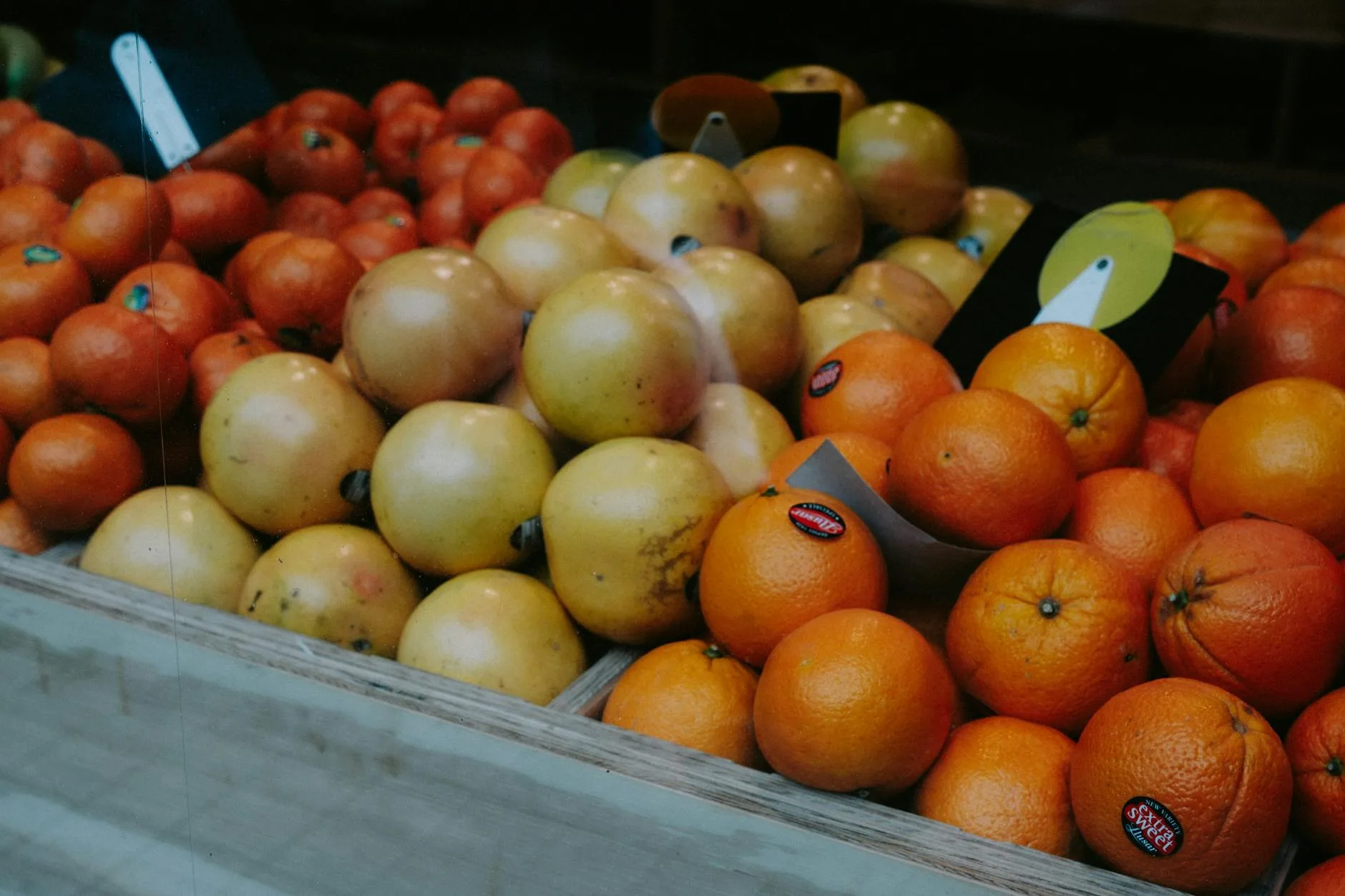
Oranges
Peel them first (the skin makes the juice bitter), then juice the flesh. Fresh-squeezed orange juice from a juicer is noticeably better than anything from a carton — brighter, sweeter, more complex. Navel oranges for sweet juice, blood oranges when they’re in season (January-March) for something more interesting.
Yield: 1 large orange ≈ 80-100ml of juice
Pears
Softer and sweeter than apples, with a more delicate flavour. Conference pears are the UK standard and juice well. They oxidise (turn brown) quickly, so drink pear juice immediately or add a squeeze of lemon.
Yield: 1 medium pear ≈ 80-100ml of juice
Pineapple
Adds tropical sweetness and pairs brilliantly with ginger and green vegetables. The sweetness masks bitterness from kale or spinach, making it the secret weapon for green juice beginners. Remove the tough outer skin but juice the core — it contains bromelain, an enzyme that aids digestion.
Yield: ¼ pineapple ≈ 100-130ml of juice
Watermelon
Produces more juice per weight than almost any other fruit. The flavour is light and refreshing — perfect for summer juicing. Remove the rind but you can juice the white part closest to the flesh. Add mint for a juice that tastes like a holiday.
Yield: 200g watermelon ≈ 150-170ml of juice
Lemons and Limes
Never the main ingredient, always the supporting act. Half a lemon in any juice adds brightness, cuts sweetness, and slows oxidation (keeping the juice looking fresh for longer). Essential in green juices to balance the earthy vegetable flavours.
Yield: 1 lemon ≈ 40-50ml of juice
The Best Vegetables for Juicing
Vegetables are where the serious nutrition lives, but they’re also where beginners go wrong. Pure vegetable juice can taste like lawn clippings. The trick is knowing which ones are mild enough to juice solo and which need fruit to make them drinkable.
Carrots
The most beginner-friendly vegetable for juicing. Carrot juice is naturally sweet, has a pleasant mild flavour, and produces good volume. After testing every common juicing vegetable, carrots are the one most people enjoy straight. They’re also cheap — a 1kg bag from any UK supermarket costs about 60-80p and makes roughly 500ml of juice.
Yield: 3 medium carrots ≈ 150-180ml of juice
Cucumbers
Mostly water, so they produce a lot of juice with a very mild, fresh flavour. Cucumber is the volume filler in most green juices — it dilutes stronger-tasting ingredients without adding much flavour of its own. No need to peel if the skin is thin.
Yield: ½ cucumber ≈ 120-150ml of juice
Celery
The celery juice trend had some questionable health claims, but the vegetable itself juices well. The flavour is mild, slightly salty, and more pleasant than you’d expect. It works best combined with apple and lemon rather than on its own (pure celery juice is an acquired taste).
Yield: 3 sticks celery ≈ 100-120ml of juice
Beetroot
Produces a deep, vibrant purple-red juice that stains everything it touches — hands, worktops, juicer parts. Taste-wise, it’s earthy and sweet. Combine with apple and ginger to make the earthiness more approachable. Start with small amounts (1 small beet per juice) until you know you like it.
The NHS acknowledges that fruit and vegetable juices count towards your 5-a-day, though only one 150ml portion per day counts due to the reduced fibre content.
Yield: 1 medium beetroot ≈ 60-80ml of juice
Ginger
Not a vegetable technically, but essential for juicing. A 2cm piece of fresh ginger transforms any juice — it adds warmth, zing, and a slight kick that balances sweetness. Start small; ginger is potent. Too much and it overwhelms everything else.
Yield: 2cm piece ≈ 5-10ml of juice (but the flavour goes a long way)
Spinach and Kale
The “healthy” options. Both add significant nutrition (iron, vitamin K, folate) but strong, earthy flavours. The rule for beginners: never use more than a small handful in any juice, and always combine with sweet fruit (apple, pineapple) and lemon to balance the taste.
Between the two, spinach has a milder flavour than kale. Start with spinach, graduate to kale once you’re comfortable with green juices.
Yield: 1 large handful spinach ≈ 30-40ml of juice
Vegetables to Avoid (or Use Sparingly)
Raw Broccoli and Cauliflower
Both produce very little juice and the flavour is aggressively cruciferous — sulphurous, bitter, unpleasant. Even small amounts can ruin an otherwise good juice.
Onions and Garlic
Some hardcore juicing recipes include these. Don’t. Raw onion juice is eye-wateringly strong, and garlic juice makes your breath actively antisocial for hours. If you want the health benefits, eat them in cooked food.
Peppers
Bell peppers juice fine technically, but the flavour is divisive — some people find it overpowering and slightly bitter. If you try it, use half a pepper maximum and combine with something sweet.
Potatoes
Starchy, flavourless juice that adds nothing good. The raw starch can also cause digestive discomfort. Skip them entirely.
The Golden Ratio for Beginner Juices
If you’re new to juicing, this ratio produces a juice that most people enjoy:
- 60% sweet base (apple, carrot, orange, or pineapple)
- 30% mild vegetable (cucumber, celery, or lettuce)
- 10% flavour accent (ginger, lemon, or beetroot)
As your palate adjusts over weeks, gradually shift towards more vegetables and less fruit. Experienced juicers often run 70-80% vegetables, but jumping straight there is a recipe for disappointment and a juicer that goes back in the cupboard.
Five Starter Juice Recipes
The Gateway Green
Your first green juice. Sweet enough that you won’t notice the spinach.
- 2 apples (Braeburn or Pink Lady)
- ½ cucumber
- 1 small handful spinach
- ½ lemon (peeled)
- 2cm fresh ginger
The Morning Carrot
Bright, sweet, and energising. A crowd-pleaser.
- 4 carrots
- 1 apple
- 1 orange (peeled)
- 2cm fresh ginger
The Beet Booster
Rich, earthy, and beautiful. Don’t wear white when making this one.
- 1 medium beetroot
- 2 apples
- 3 carrots
- ½ lemon
The Tropical Green
Pineapple hides the kale remarkably well.
- ¼ pineapple
- 1 apple
- ½ cucumber
- 1 small handful kale (stems removed)
- ½ lime
The Simple Celery
The “celery juice” trend, improved with apple and lemon for flavour.
- 4 sticks celery
- 2 apples
- ½ lemon
- 2cm fresh ginger
How Much Produce Do You Need
Juicing uses more produce than you’d expect. The fibre left behind as pulp accounts for 30-50% of the original weight. Budget accordingly:
- One juice (300-400ml) needs roughly 400-600g of produce
- A week of daily juicing needs about 3-4kg of fruit and vegetables
- Budget: roughly £8-15 per week from a UK supermarket, depending on what you buy
Keeping Costs Down
- Buy in season. UK apples are cheapest August-November. Citrus peaks December-March.
- Use supermarket “wonky” or imperfect produce. Aldi, Lidl, and Morrisons sell misshapen fruit and veg at a discount — they juice identically to the pretty ones.
- Grow your own. Cucumbers, spinach, and kale grow easily in a UK garden. Carrots too if you have decent soil.
- Buy loose, not pre-packaged. Market stalls and greengrocers are often cheaper than supermarkets for juicing quantities.
For making smoothie bowls with a blender, the produce costs are similar but you use less per serving because the fibre stays in.
What to Do with the Pulp
A juicer produces a surprisingly large amount of pulp. Throwing it away feels wasteful — and it is. Here’s what to do with it:
Composting
The easiest option. Fruit and vegetable pulp breaks down quickly in a compost bin. It’s rich in carbon and adds bulk to the heap.
Cooking
- Carrot pulp goes into carrot cake, muffins, or soup
- Beetroot pulp makes brownies (not a joke — beetroot brownies are excellent)
- Apple pulp works in crumble topping or mixed into porridge
- Vegetable pulp adds fibre to bolognese, curry, or soup — dehydrate it first if you want to store it
Broth
Simmer vegetable pulp in water for 30 minutes with herbs and seasoning. Strain. Basic vegetable stock for free.
When to Drink Your Juice
Freshness
Drink juice within 15-30 minutes of making it for maximum nutrition. Vitamins — particularly vitamin C — degrade rapidly once exposed to air and light. After 24 hours in the fridge, a juice has lost a measurable percentage of its nutritional value.
If you must prep ahead, store in an airtight glass bottle with minimal headspace, add lemon juice (the acidity slows oxidation), and refrigerate immediately. Consume within 24 hours.
Best Time of Day
- Morning on an empty stomach — absorption is fastest. Wait 20-30 minutes before eating solid food.
- Before a workout — the natural sugars provide quick energy without the heaviness of solid food
- NOT as a meal replacement — juice lacks fibre, fat, and protein. It’s a supplement, not a meal.
If you’re interested in higher-powered juicing equipment, our best high-speed blenders guide covers machines that handle tougher ingredients.

Common Beginner Mistakes
Using Too Much Fruit
It’s tempting to make juice that tastes like a Tropicana advert, but all-fruit juice is essentially sugar water. A juice made from 4 apples and 2 oranges contains as much sugar as a can of Coca-Cola. Keep to the 60/30/10 ratio and shift towards more vegetables as you progress.
Not Cleaning the Juicer Immediately
Pulp dries and hardens onto mesh screens within 30 minutes. Cleaning a juicer that’s been sitting for a few hours is miserable work and the main reason people stop juicing. Rinse all parts immediately after use — it takes 60 seconds.
Buying Exotic Ingredients
You don’t need wheatgrass, spirulina, turmeric root, or açaí to make good juice. Apples, carrots, cucumber, and ginger from any UK supermarket make excellent juice. Start simple. Add complexity once the habit is established.
Making Too Much
One juice (300-400ml) is enough. Making a litre “for later” means the second half sits in the fridge losing nutrients. Better to make a smaller amount fresh each time.
Skipping the Lemon
Lemon juice serves three purposes: it adds brightness, it cuts through earthiness, and the citric acid slows oxidation. Half a lemon in every juice is the simplest improvement you can make.
Bottom Line
Start with the fruits and vegetables you already know you like, then gradually add more greens. Apples, carrots, oranges, cucumber, and ginger are the five ingredients that cover 90% of beginner juicing. The golden ratio — 60% sweet fruit, 30% mild vegetable, 10% flavour accent — produces juices that taste good from day one.
Don’t overthink it, don’t buy exotic ingredients, and clean the juicer the moment you’re done. Those three rules keep the habit alive longer than any recipe book.
Keep reading on KitchenGearUK: Best NutriBullet and Personal Blenders 2026 UK, Slow Juicer vs Centrifugal Juicer: Which Is Better?, How to Choose a Blender for Smoothies, How to Make Smoothie Bowls with a Blender.
Frequently Asked Questions
Is juicing actually healthy? Juicing concentrates vitamins and minerals from fruits and vegetables into an easily absorbed form. The NHS counts 150ml of fruit or vegetable juice as one of your 5-a-day. However, juice lacks the fibre of whole produce, so it should supplement your diet, not replace whole fruits and vegetables.
What is the best fruit to start juicing with? Apples. They produce good volume, have a mild sweetness that pairs with almost anything, and are cheap and available year-round in the UK. Braeburn and Pink Lady are the best varieties for juicing.
Can I juice frozen fruit? Most juicers can’t handle frozen fruit — it jams the mechanism. Thaw frozen produce completely before juicing. Blenders handle frozen fruit better than juicers, which is one reason smoothies are sometimes more practical.
How much does juicing cost per week? About £8-15 per week for one juice per day, buying produce from a UK supermarket. Buying seasonal, wonky, or loose produce keeps costs at the lower end. Growing your own cucumbers, spinach, and kale reduces costs further.
Do I need an expensive juicer? Not to start. A centrifugal juicer (the fast, noisy type) costs £30-60 and handles all the beginner fruits and vegetables in this guide. Masticating (slow) juicers produce slightly more juice with less oxidation but cost £100-300. Start cheap, upgrade if the habit sticks.