Stand mixer bowl sizes look simple on a spec sheet, but 4.3 litres, 4.8 litres, 5.5 litres and 6.9 litres mean very different things once you start making bread dough, cake batter or double batches of biscuits. The right size depends on what you bake most often, how much worktop space you have, and whether you need a compact mixer or a machine that can handle family-scale baking.
Quick Answer: Most UK home bakers should choose a 4.8-5.5L stand mixer bowl. Go smaller only for compact kitchens and small batches; go 6.6-7.0L if you regularly make bread dough, batch bake or cook for a larger household. Bowl size is useful only if the motor and attachment reach are good enough for your usual quantities.
In This Article
- Why Bowl Size Matters More Than You Think
- Standard Bowl Sizes: What’s Available in the UK
- What Actually Fits in Each Bowl Size
- Single Batch vs Double Batch: The Real Test
- Bowl Material: Stainless Steel vs Glass vs Ceramic
- Matching Bowl Size to Your Baking Style
- Extra Bowls and Compatibility
- Physical Size: Will It Fit on Your Worktop?
- Our Recommendation: Which Size to Buy
- Frequently Asked Questions
Why Bowl Size Matters More Than You Think
Bowl capacity isn’t just about how much mixture you can fit in. It determines what you can practically make, how well ingredients combine, and whether your mixer can handle the load without straining.
Overfilling Is the Number One Stand Mixer Mistake
Fill a bowl past about two-thirds capacity and things go wrong fast. Flour puffs out when the mixer starts. Wet ingredients splash over the rim. Bread dough climbs the hook and hits the attachment shaft. It happens with every brand — KitchenAid, Kenwood, Smeg — because physics does not care about price tags. The Which? stand mixer reviews confirm this — bowl capacity is consistently their top consideration.
A 4.3-litre bowl has about 2.8 litres of usable capacity. A 6.9-litre bowl gives you roughly 4.5 litres. That difference — just 1.7 litres — is the gap between comfortably making a triple batch of cookies and scraping dough off your ceiling.
Undermixing in an Oversized Bowl
Going too large has its own problems. Small quantities in a big bowl don’t make proper contact with the attachment. Whipping two egg whites in a 6.9-litre bowl is an exercise in frustration — the whisk barely touches them. Some brands sell smaller secondary bowls specifically for this reason.
Standard Bowl Sizes: What’s Available in the UK
KitchenAid Sizes
- 3.3 litres (Mini) — the KitchenAid Artisan Mini. Good for small households and light baking
- 4.3 litres (Artisan Mini Plus) — the step up. Handles most single-batch recipes
- 4.8 litres (Artisan) — by far the best-selling size. The one most people mean when they say “KitchenAid”
- 6.6 litres (Professional) — for serious home bakers and semi-professional use
- 6.9 litres (Pro 600) — the largest consumer model. Bowl-lift design rather than tilt-head
Kenwood Sizes
- 4.6 litres (Kenwood Prospero+) — compact, designed for smaller kitchens
- 5.0 litres (Kenwood Chef) — the standard Kenwood size, been around for decades
- 6.7 litres (Kenwood Chef XL) — the most popular choice for families
- 7.0 litres (Kenwood Titanium) — the premium line, metal gears, professional-grade motor
Smeg and Others
Smeg’s stand mixer comes in at 4.8 litres — the same as the KitchenAid Artisan. Sage (Breville) offers a 4.7-litre model. Bosch’s MUM series ranges from 3.9 to 5.5 litres depending on the model.
Our stand mixer attachments guide covers what connects to each of these models.
What Actually Fits in Each Bowl Size
This is what the manufacturers don’t tell you clearly enough. Here’s what each capacity can handle in practice, based on typical UK recipes.
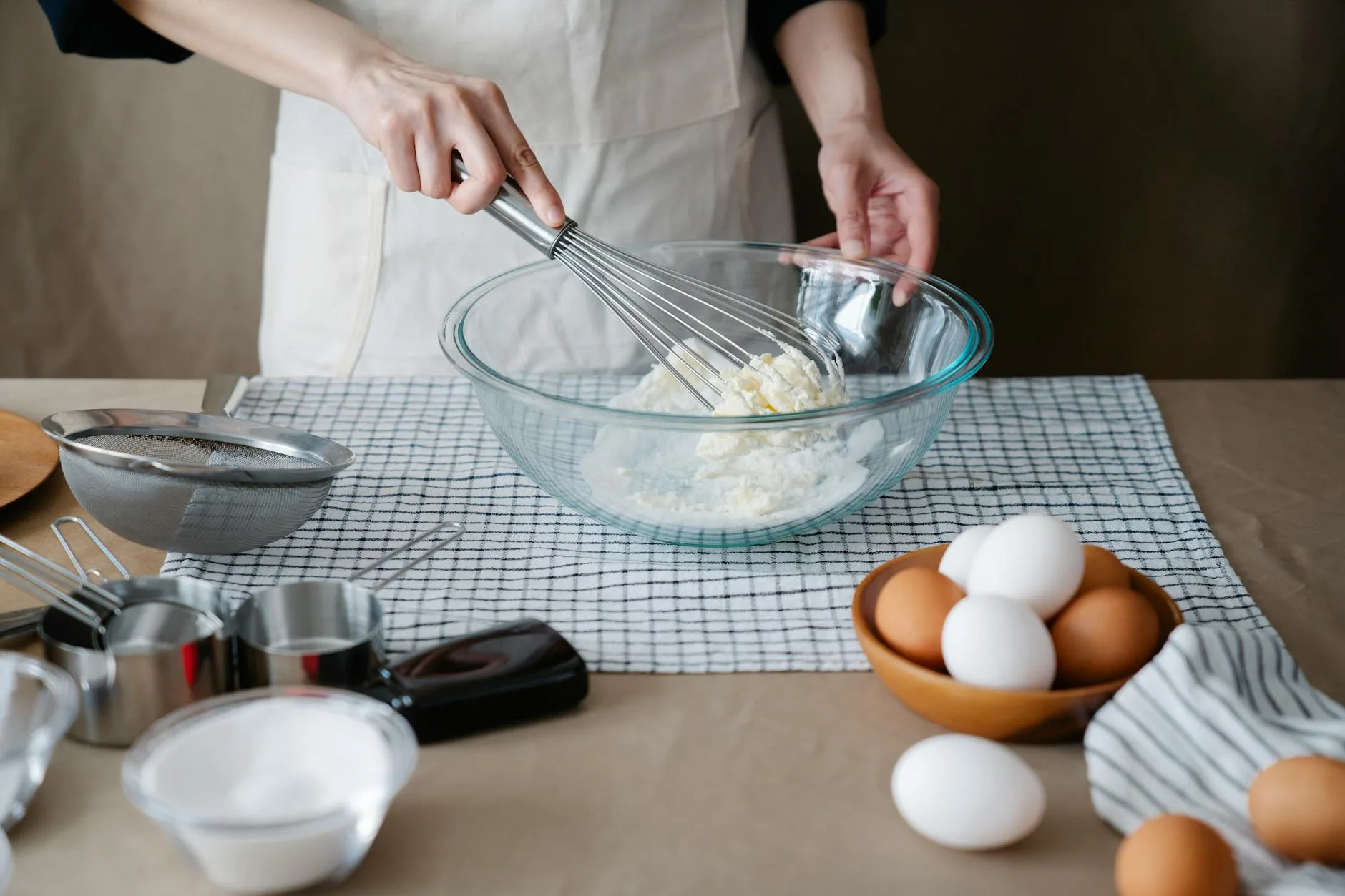
3.3-4.3 Litres (Small)
- Single batch of cake batter (Victoria sponge, banana bread): yes, comfortably
- Single batch of biscuit dough (about 24-30 biscuits): yes
- Single batch of bread dough (one 450g loaf): yes, but the dough hook is working near capacity
- Double batch of anything: no — you’ll overfill
- Meringue (4 egg whites): yes
- Whipped cream (300ml): yes
4.8-5.5 Litres (Standard)
- Double batch of cake batter: yes, but watch the volume with raising agents
- Double batch of biscuits: yes
- Single large bread dough (two 450g loaves): yes, this is the sweet spot
- Double batch of bread dough: possible but right at the limit. The motor will work hard
- Meringue (6-8 egg whites): yes
- Royal icing (large batch for decorating): yes
6.6-7.0 Litres (Large)
- Triple batch of cookies: yes
- Double batch of bread dough: yes, comfortably
- Christmas cake mixture (full 23cm cake): yes
- Large batch of pasta dough: yes
- Meringue (10+ egg whites for pavlova or macarons): yes
- Small batches (2 egg whites, single cake): struggles — ingredients don’t reach the whisk
Single Batch vs Double Batch: The Real Test
Why Double-Batching Matters
Most home bakers don’t just make one batch of biscuits at Christmas. They make three. They don’t make one loaf of bread — they make two because it’s the same effort. The ability to double-batch comfortably is the single biggest practical difference between bowl sizes.
If you regularly bake for a family of four or more, or you bake in batches to freeze, a 4.8-litre bowl is your minimum. A 5.5-litre or larger gives you breathing room. After six months of using a KitchenAid Artisan (4.8L), I found myself wishing I’d gone for the 6.6-litre version every time I tried to double a bread recipe.
The Motor Matters Too
A bigger bowl only helps if the motor can handle the load. Bread dough is dense and heavy — a 300W motor straining to knead 1.5kg of dough in a 6.9-litre bowl isn’t doing you any favours. Check the motor wattage alongside the bowl size:
- Small bowls (3.3-4.3L): 250-350W is adequate
- Standard bowls (4.8-5.5L): 300-500W recommended
- Large bowls (6.6-7.0L): 500W minimum, 800W+ for heavy dough
Bowl Material: Stainless Steel vs Glass vs Ceramic
Stainless Steel
The default for most stand mixers and the best all-round option. Lightweight, durable, dishwasher-safe, and conducts temperature changes quickly — useful when you need a chilled bowl for whipping cream or pastry.
- Pros: lightweight, unbreakable, affordable as a spare
- Cons: can’t see contents from the side, scratches over time (cosmetic only)
Glass
KitchenAid and a few other brands offer tempered glass bowls. The big advantage is visibility — you can see exactly how your mixture is coming together without peering over the top. They look beautiful on the worktop.
- Pros: see-through, microwave-safe, attractive
- Cons: heavier than stainless steel, can chip or crack if dropped (about £55-£70 to replace)
Ceramic
Decorative ceramic bowls are available as accessories for some KitchenAid models. They’re gorgeous but purely aesthetic — heavier than glass, cold to the touch, and fragile.
- Pros: stunning designs, great for serving
- Cons: heavy, fragile, typically £80-£100 each, not practical as your main bowl
For everyday baking, stainless steel wins. Buy a glass bowl as a second bowl if you want the visual feedback.
Matching Bowl Size to Your Baking Style
Occasional Baker (Once or Twice a Month)
A 4.3-4.8 litre bowl handles everything you need. You’re making single batches, the odd birthday cake, weekend bread. No need for anything larger.
Regular Baker (Weekly)
Go for 4.8-5.5 litres. The extra capacity means you can double recipes without worry, and you’ll appreciate the headroom when making sticky doughs or airy batters. This is where the Kenwood Chef (5.0L) and KitchenAid Artisan (4.8L) sit — the bestsellers for a reason.
Serious Baker or Large Family
6.6 litres or larger. If you’re making Christmas cakes, multiple loaves of bread, or large batches of pasta dough, the smaller bowls will frustrate you. The Kenwood Chef XL (6.7L) is the favourite here — enough capacity for virtually any home baking task, and the motor can handle it.
Professional or Semi-Pro
7.0 litres with a 1,000W+ motor. The Kenwood Titanium or KitchenAid Pro 600 are the go-to choices. These are serious machines that cost £400-£700 but will outlast multiple cheaper alternatives. Our kitchen appliance guides cover other investment pieces worth considering.
Extra Bowls and Compatibility
Why a Second Bowl Is Worth It
If you’re making anything that requires separate dry and wet mixing — meringue-topped pies, multi-component cakes, bread with a separate starter — having two bowls saves time. Mix one component, swap the bowl, mix the next. No washing up between stages.
Compatibility Rules
- KitchenAid: bowls within the same series (Artisan, Pro) are interchangeable. Artisan bowls don’t fit Pro models and vice versa. Third-party bowls exist but check the locking mechanism
- Kenwood: Chef and Chef XL bowls are NOT interchangeable. The bayonet fitting is different. Kenwood’s own accessories page lists compatible sizes
- Smeg: only Smeg bowls fit Smeg mixers. No third-party options
Always check compatibility before buying a second bowl. A 4.8-litre KitchenAid Artisan bowl costs about £35-£50 from John Lewis or Lakeland. The glass version runs £55-£70.
Physical Size: Will It Fit on Your Worktop?
Bowl size correlates with machine size, and in a typical UK kitchen — where worktop space is a luxury — this matters.
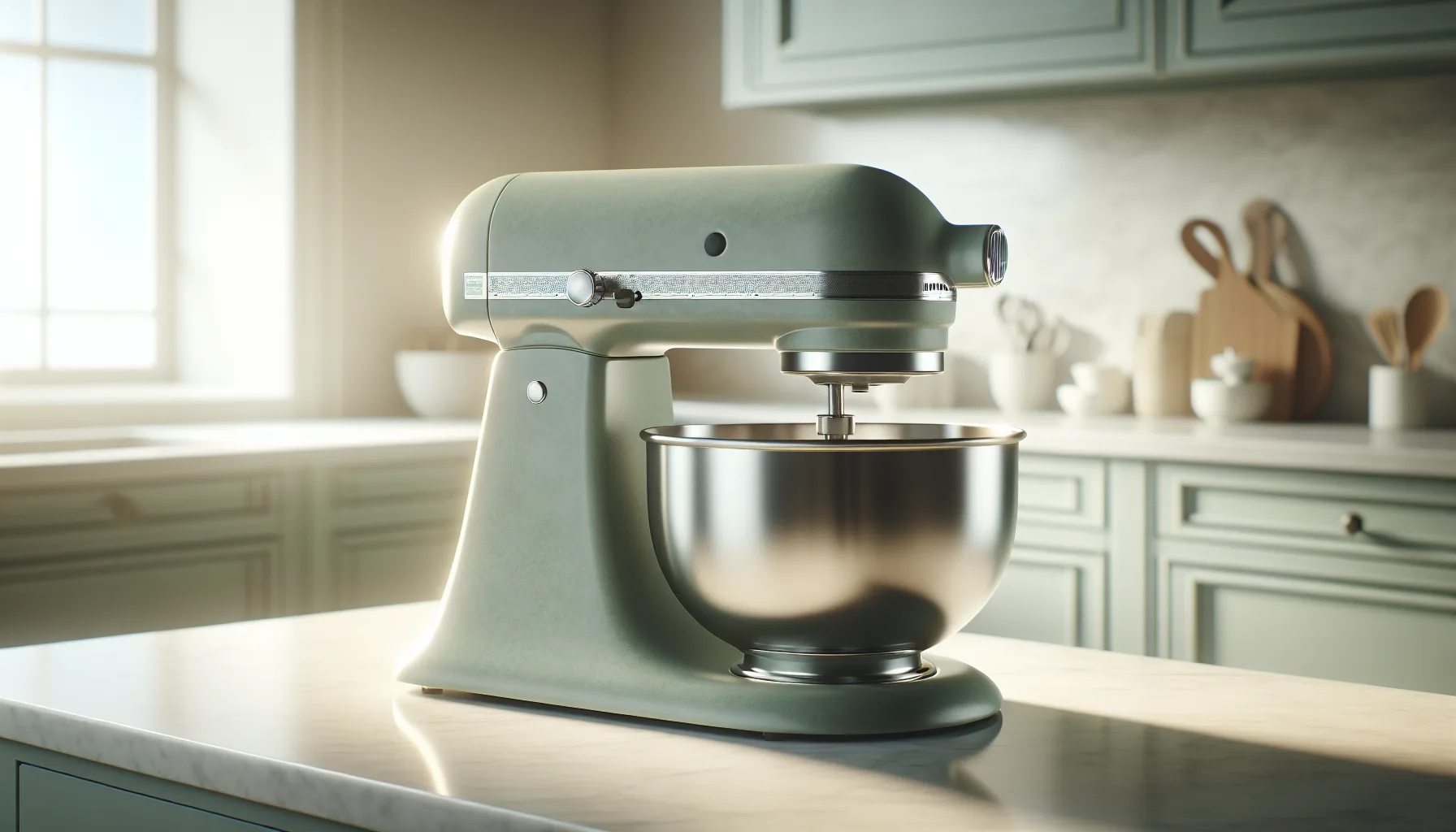
Compact (3.3-4.3L Models)
- Footprint: roughly 20cm x 30cm
- Height: about 30-33cm
- Weight: 5-7kg
- Perfect for galley kitchens or if you store the mixer in a cupboard between uses
Standard (4.8-5.5L Models)
- Footprint: roughly 22cm x 36cm
- Height: about 35-37cm
- Weight: 8-10kg
- Fits comfortably on most worktops but needs clearance above if under wall cabinets
Large (6.6-7.0L Models)
- Footprint: roughly 25cm x 40cm
- Height: about 37-42cm (bowl-lift models are taller)
- Weight: 10-14kg
- Needs a dedicated spot. You’re not moving a 13kg mixer in and out of a cupboard regularly
Measure your worktop space and the gap between worktop and wall cabinets before buying. Plenty of 6.9L pro-style mixers are too tall to tuck under wall cabinets comfortably. Take a tape measure if you are comparing display models in John Lewis or another retailer.
If you’re working with a compact kitchen, our small kitchen organisation guide has layout ideas that might help.
Our Recommendation: Which Size to Buy
Best for Most People: 4.8 Litres
The KitchenAid Artisan (4.8L) and Kenwood Chef (5.0L) are bestsellers for a reason. They handle single and modest double batches, fit on standard worktops, and the motors are matched well to the bowl capacity. Budget about £300-£400 from John Lewis, Argos, or Lakeland. This is what we’d recommend if you bake weekly and don’t regularly make huge batches.
Best for Families and Frequent Bakers: 6.7 Litres
The Kenwood Chef XL (6.7L) hits the sweet spot between capacity and practicality. It handles double batches of bread comfortably, has a strong motor, and doesn’t take up notably more space than the 5.0L model. About £350-£500 depending on the model. If you bake for a family of four or more, or you freeze batches regularly, this is the one.
Best for Small Kitchens: 4.3 Litres
The KitchenAid Mini Plus (4.3L) does everything a single baker or couple needs without dominating the worktop. It’s lighter, smaller, and about £100 cheaper than the full Artisan. The only trade-off is you can’t double-batch — but if you’re honest about your baking habits, that might not matter.
Keep reading on KitchenGearUK: How to Make Bread with a Stand Mixer, Best Stand Mixers 2026 UK: KitchenAid, Kenwood & Smeg, Best Bread Makers 2026 UK: Sourdough, Gluten-Free & More, KitchenAid vs Kenwood vs Smeg: Stand Mixer Showdown.
Frequently Asked Questions
Can I use a larger bowl on a smaller stand mixer? No. Stand mixer bowls are designed to lock into specific models. A 6.9-litre bowl won’t fit a 4.8-litre Artisan — the locking mechanism and motor shaft are different. Always check compatibility with your exact model before buying replacement or extra bowls.
What happens if I overfill my stand mixer bowl? Ingredients splash out during mixing, flour puffs everywhere when the mixer starts, and bread dough can climb up the hook and jam the attachment shaft. As a rule, never fill past two-thirds of the bowl’s stated capacity to avoid mess and potential motor strain.
Is a glass bowl better than stainless steel? Glass bowls let you see the mixture from all angles, which is useful for monitoring consistency. But they’re heavier, more fragile, and more expensive to replace. For everyday baking, stainless steel is more practical. Glass works well as a second bowl for tasks where visibility helps.
How much does an extra stand mixer bowl cost? A stainless steel replacement bowl runs about £35-£50 for KitchenAid and £30-£45 for Kenwood. Glass bowls cost £55-£70. Decorative ceramic bowls from KitchenAid range from £80-£100. Prices vary by retailer — John Lewis, Lakeland, and Amazon UK all stock them.
Do I need a bigger bowl for bread making? Bread dough roughly doubles in volume during mixing as air is incorporated. A single loaf (using about 500g flour) works in a 4.8-litre bowl. For two loaves simultaneously, you want at least 5.5 litres, ideally 6.7 litres, with a motor of 500W or more to handle the dense dough.