Hand mixer vs stand mixer is mostly a question of dough, batch size and cupboard space, not which tool looks better on the worktop. If you bake cakes, whip cream and make the odd tray of brownies, buy a decent hand mixer. If you make bread, enriched dough, big celebration cakes or weekly batches, a stand mixer earns its space.
In This Article
- Hand Mixer vs Stand Mixer: The Short Answer
- What a Hand Mixer Does Better
- What a Stand Mixer Does Better
- Power, Capacity and Control Compared
- Space, Noise and Cleaning in a UK Kitchen
- Real UK Costs: Budget, Mid-Range and Premium Options
- Common Buying Mistakes
- Frequently Asked Questions
Hand Mixer vs Stand Mixer: The Short Answer
For most UK kitchens, my first recommendation is a hand mixer unless you already know you make dough or large batches often. A £30-£55 hand mixer from Kenwood, Russell Hobbs or Bosch covers the jobs most people actually do: Victoria sponge batter, buttercream, whipped cream, pancake batter, meringue and mashed potato. It lives in a drawer, washes quickly and does not need a permanent worktop spot.
A stand mixer is the better buy when mixing becomes the annoying bit of baking rather than the fun bit. Bread dough, brioche, pizza dough, Christmas cake, double batches of buttercream and stiff cookie dough all expose the limits of a hand mixer. That is when a 4.6-4.8 litre stand mixer makes sense, especially if you bake every week.
The difference I would use is simple:
- Buy a hand mixer if you bake casually, have a small kitchen, spend under £70, and mostly mix soft batters or creams.
- Buy a stand mixer if you make dough, bake in batches, want hands-free mixing, or already resent holding a mixer for five minutes.
- Do not buy both at once unless you bake a lot; start with the tool that solves your current problem.
This article deliberately stays on the ownership decision. If you already know you want a stand mixer and need model-level advice, start with our best stand mixers UK guide instead. If your decision is about kneading bread, our stand mixer bread guide goes deeper than this comparison should.
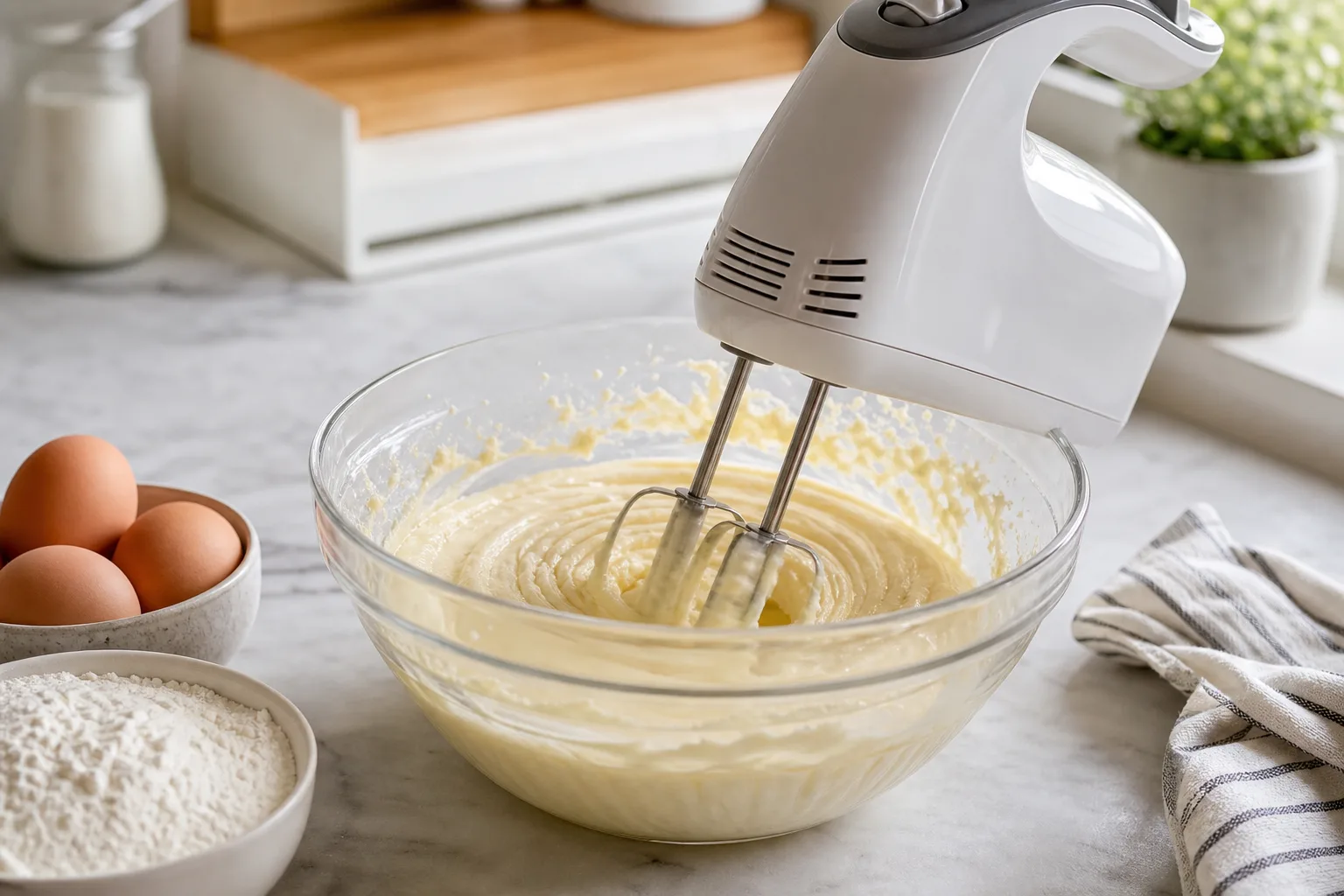
What a Hand Mixer Does Better
A hand mixer is the better everyday tool because it is quick to grab and quick to clean. That sounds boring until you are cooking after work and only need to whip 300ml of cream or beat two eggs into cake batter. A stand mixer can do those jobs, but it often feels like using a lawnmower to trim one herb pot.
Small, soft mixing jobs
Hand mixers suit recipes where the mixture is soft and the bowl does not need heavy restraint. Sponge batter, cupcake mix, buttercream, cream cheese icing and meringue are all good examples. You can move the beaters around the bowl, scrape down the sides as you go, and judge texture by feel.
The control is useful. With buttercream, for example, a hand mixer lets you work the beaters into the butter before adding icing sugar in stages. You still get the dust cloud if you rush it. Ask me how I know. But it is easier to back off than with a stand mixer that starts flinging sugar up the bowl wall.
Tiny kitchens and shared cupboards
In a flat kitchen, a hand mixer wins before you even plug it in. A typical hand mixer weighs about 1-1.5kg and fits in a drawer with its beaters. A stand mixer is usually 9-12kg and wants a worktop, low cupboard or strong shelf.
That matters in older UK terraces, rentals and kitchens where the toaster already has to move before you can chop an onion. If you have to haul a stand mixer out from a bottom cupboard every time, you will use it less than you imagined.
Fast cleanup
A hand mixer leaves you with two beaters and a bowl. Some models include dough hooks, but I would treat those as occasional-use accessories rather than a bread habit. The hooks can manage a small soft dough, but the motor and your wrists usually complain before the gluten develops properly.
For low-mess baking, the hand mixer is hard to beat:
- Cream and meringue: light mixtures, short run time, easy washing.
- Cake batter: enough power for creaming butter and sugar if the butter is properly softened.
- Icing: good control in smaller bowls.
- Pancake batter: quick, though a balloon whisk may be just as easy.
- Mashed potato: works, but stop early unless you enjoy glue.
The downside is stamina. Holding a mixer for eight minutes while making Swiss meringue buttercream is not a terrible hardship, but it is not relaxing either. That is the line where a stand mixer starts to look less indulgent.
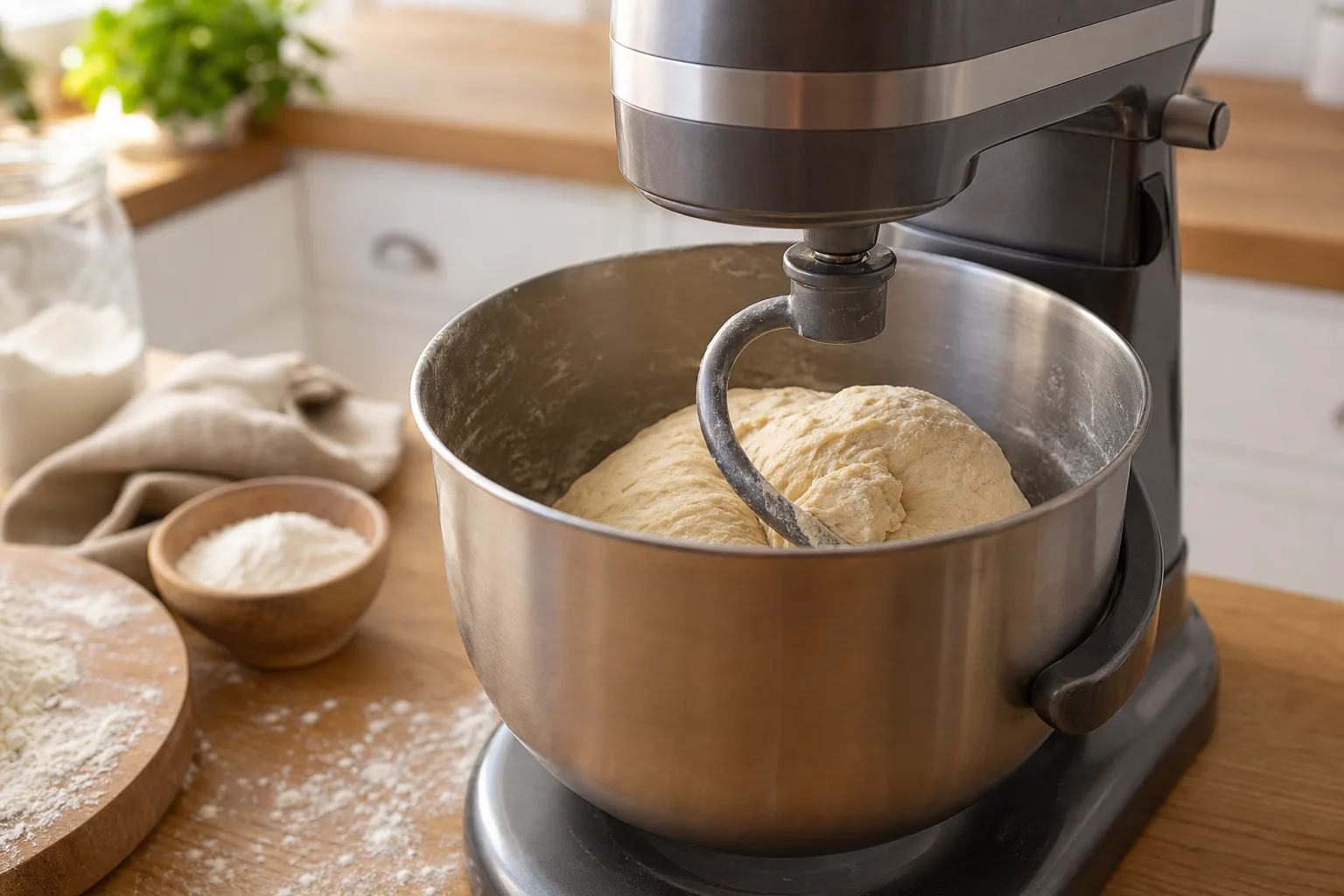
What a Stand Mixer Does Better
A stand mixer is not just a hand mixer with a bowl. The fixed head, heavier motor, larger bowl and planetary mixing action change what you can make comfortably. It can mix while you weigh ingredients, clear the counter or drink tea and pretend the kitchen is under control.
Dough and heavy mixtures
Dough is the clearest reason to choose a stand mixer. Bread dough, pizza dough, enriched buns and bagels need torque, bowl stability and several minutes of kneading. A hand mixer with dough hooks may claim it can do this, but regular bread making is where cheaper hand mixers burn out.
If bread is the reason you are shopping, read our guide to using stand mixer dough hooks properly before choosing a model. The short version: use low speed, respect the stated flour capacity, and do not assume a shiny mixer can handle endless stiff dough.
Bigger batches
Stand mixers suit batch work. A 4.8 litre bowl can handle a double cake mix or a serious amount of buttercream without chasing mixture around a shallow bowl. If you bake birthday cakes, school fair cupcakes or freezer batches, this is where the stand mixer saves time.
It also gives more consistent results. The beater reaches the same path each rotation, so creaming and whipping are repeatable once you know your machine. You still need to scrape down the bowl, but you are not relying on arm position for every pass.
Attachments and long-term use
Many stand mixers support extra attachments: pasta rollers, mincers, graters, ice cream bowls and food grinder accessories. These are not a reason to buy a stand mixer on their own. Most attachments cost £60-£180 each, and some become expensive cupboard ornaments.
They do matter if you already plan to use them. A KitchenAid or Kenwood stand mixer can become a small appliance platform. Our stand mixer attachments guide covers which ones are useful and which are mostly aspirational.
Power, Capacity and Control Compared
Spec sheets can mislead here because hand mixer wattage and stand mixer wattage do not compare neatly. A 350W hand mixer is not automatically stronger than a 300W KitchenAid Artisan. Motor design, gearing and how the tool transfers power into the mixture matter more than the number printed on the box.
Wattage is only part of the story
Hand mixers often advertise 300-500W. That sounds healthy, but the motor is small and the tool depends on you holding it steady. Stand mixers may list lower wattage yet cope better with heavy loads because the motor, gearing and bowl lock are built for resistance.
KitchenAid’s own Artisan 4.8L specification lists the supplied paddle, wire whisk, dough hook and flex-edge beater, while Kenwood’s Chef Baker range is built around larger bowl capacity and heavier batch work. Those manufacturer figures are useful, but they do not replace the boring question: what do you actually make?
For a family sponge, cupcakes or icing, a hand mixer has enough power. For dough, stiff cookie mix or repeated batches, the stand mixer has the advantage because it can work for longer without you fighting the bowl.
Capacity changes behaviour
Hand mixers work in whatever bowl you use. That is flexible, but it can also be messy if the bowl is too shallow. A stand mixer bowl is deeper and designed around the beater path, so flour and icing sugar are less likely to escape once you learn the speeds.
The catch is minimum quantity. Stand mixers can be poor with tiny amounts. One egg white in a large bowl may sit below the whisk path. A small hand mixer or manual whisk is better for that.
Control and texture
Hand mixers give you direct control. You can tilt the bowl, chase pockets of butter and feel when the mixture thickens. Stand mixers give you repeatability and spare hands. Neither is always better.
For cake, both work. For dough, stand mixer. For very small quantities, hand mixer. For buttercream, stand mixer if you make a lot; hand mixer if it is one cake and you do not want the big bowl washing up.
Space, Noise and Cleaning in a UK Kitchen
The most ignored part of the hand mixer vs stand mixer decision is where the machine lives. A stand mixer you cannot leave out becomes a 10kg guilt purchase. A hand mixer you can reach in five seconds gets used.
Worktop space
Measure the space before buying a stand mixer. Not in a vague “it should fit” way. Measure width, depth and height under wall cupboards. Tilt-head mixers need room for the head to lift; bowl-lift mixers need side clearance.
If you have a compact galley kitchen, a hand mixer is the sane default. If you have a baking zone, wide worktop and plug socket nearby, a stand mixer feels much less intrusive.
Noise and timing
Hand mixers can sound harsher because the motor is close to your hand and often runs at a higher pitch. Stand mixers are not silent, but the better models sound lower and steadier. Either can wake a baby or annoy someone on a work call in the next room.
For late-night baking, I would rather use a stand mixer on low speed than a cheap hand mixer at full speed. For a two-minute whisk, the difference does not matter much.
Washing up
Hand mixers win for quick washing. Stand mixers win when the alternative is multiple bowls, spatulas and tired arms. Most stainless steel beaters and bowls are dishwasher-safe, but check the manual because some coated attachments and aluminium parts can discolour in the dishwasher.
Food safety still applies to both tools. If you are mixing raw egg batter and then making icing, wash beaters, bowls and spatulas properly between jobs. The Food Standards Agency’s chilling and hygiene advice is worth following when dairy, eggs and leftovers are involved.
Real UK Costs: Budget, Mid-Range and Premium Options
Specific prices move, but the gap between hand mixers and stand mixers is huge. As of June 2026, you can buy a useful hand mixer for the price of a takeaway for four. A good stand mixer is more like a weekend away.
Hand mixer price bands
Budget hand mixers usually sit around £18-£30 at Argos, Amazon UK and supermarkets. They are fine for light batters and cream, but the beaters can feel flimsy and the slowest speed may still be too fast.
The sweet spot is about £30-£60. John Lewis lists Kenwood hand mixers around £29.99-£54, including the Kenwood QuickMix Go and QuickMix+ ranges. That is where I would shop first for most homes because the jump from bargain-bin to decent is noticeable.
Premium hand mixers cost about £100-£140. KitchenAid’s corded and cordless hand mixers sit in this band at John Lewis, with the cordless Go hand mixer listed around £139. I like the idea for kitchens with awkward sockets, but I would only pay that if you specifically want cordless convenience. Otherwise, a £40-£55 Kenwood is the better-value buy.
Stand mixer price bands
Entry-level stand mixers start around £90-£180 from brands such as Tower, VonShef, Morphy Richards and Salter. Some are decent for cakes, but check owner reviews for dough performance and wobble. Cheap stand mixers often look the part before they feel the part.
Mid-range stand mixers sit around £250-£450. This is where Kenwood kMix and discounted KitchenAid models become realistic. For regular home baking, this is the sensible stand-mixer zone.
Premium stand mixers run from about £450 to £800+. John Lewis has listed KitchenAid Artisan 4.8L models around £459-£699 depending on colour and bundle, while some Kenwood Chef Baker models sit around £529-£688. These prices only make sense if the mixer will be used often enough to stay out, not hidden behind casserole dishes.
My buying recommendation
If I were buying for a normal UK kitchen, I would choose:
- Best first buy: Kenwood hand mixer around £30-£55 from John Lewis, Argos or Amazon UK.
- Best regular-baker upgrade: Kenwood kMix or similar stand mixer around £300-£360 when discounted.
- Best premium choice: KitchenAid Artisan 4.8L around £459-£699 if you care about build, colours and attachment range.
The hand mixer is the better first purchase. The stand mixer is the better second purchase once your baking habit has proved it deserves the space.
Common Buying Mistakes
The biggest mistake is buying the machine for the baker you hope to become, not the way you cook now. A stand mixer will not make you bake every weekend. It will just make your first three bakes easier before it starts collecting dust.
Buying a stand mixer for occasional cake
If you bake six cakes a year, buy a hand mixer. You do not need a £500 machine to cream butter and sugar. Spend the difference on good tins, digital scales and an oven thermometer; those improve results more often.
Our baking tray and sheet guide is a duller purchase, but dull kitchen kit often does more work than the glamorous machine.
Trusting dough hooks on a cheap hand mixer
Those little spiral hooks look reassuring. They are fine for a soft, small dough once in a while. They are not a replacement for a stand mixer if you make bread weekly.
If dough is the main job, buy a stand mixer with a clear dough capacity and a stable base. Then read the manual and use low speed. Treating a stand mixer like a cement mixer is how motors get hot and bowls start walking across the counter.
Forgetting bowl size
A stand mixer bowl that is too small is annoying; one that is too large can be poor with small quantities. Around 4.6-4.8 litres is the safest home size. Bigger bowls suit batch bakers, but they are not automatically better.
If you are choosing between specific models, compare bowl size with the kind of recipes you make. Our stand mixer bowl size guide gives the detail without turning this article into a spec spreadsheet.
Ignoring storage
Before buying a stand mixer, decide exactly where it will live. If the answer is “somewhere”, wait. If it has a permanent worktop spot or an easy lift-out cupboard, carry on.
For small kitchens, the hand mixer is not a compromise. It is the right tool.
Frequently Asked Questions
Can a hand mixer replace a stand mixer? For cakes, cream, icing and small batters, yes. For regular bread dough, large batches and long mixing jobs, no.
Can a stand mixer do everything a hand mixer does? Nearly, but it can be clumsy for tiny quantities. One egg white, a small bowl of cream or a quick sauce may be easier with a hand mixer or manual whisk.
Is a stand mixer worth it for bread? Yes, if you make bread often. It saves effort and gives more consistent kneading, but you still need to follow dough capacity and speed limits.
How much should I spend on a hand mixer? Around £30-£60 is the sensible UK range. Cheaper models work for occasional use, while premium cordless models around £100-£140 are more about convenience than better cakes.
How much should I spend on a stand mixer? Occasional bakers should be cautious below £180. Regular bakers will usually be happier in the £300-£600 range from Kenwood or KitchenAid.
Which should I buy first? Buy a hand mixer first unless you already make dough or bake in big batches. Upgrade to a stand mixer when the hand mixer starts limiting what you make.